I don’t nerd out often enough. I do categorize my tech-oriented blog posts as either geek horror or cyber war, but I also claim this blog in no way reflects the opinions of my employer. This post is an exception as I’m going to share some blog posts I have at my employer’s website; but still, this post on my site expresses my personal views.
That link above speaks to how AI applies to threat detection. There are certainly credible stories on the fears and cautions around the use of AI, but know that threat actors are using AI, so it’s required to counter their tactics. We keep humans in the loop to ultimately control the outcome.
Still, I get the fears. Never in my career have I seen so much hype on a specific tech. With all the talk on job loss and the Singularity with Artificial Super Intelligence, it feels existential. But also, in my career, indeed my lifetime, I’ve only seen technological progress move in one direction. For better or worse.
2000 years ago, Socrates warned against the perils of writing. Clearly, Socrates liked the sound of his own voice, but he thought writing would impair memory as people began to rely upon recorded versions of text. Writing itself was already fairly ancient as cuneiform and Egyptian writing goes back 3,000 years before Socrates, but Greek writing was only a few hundred years old at the time and Greek culture, especially teaching, was largely oral. Socrates also thought that writing would give people lots of information and “reminders,” but not genuine understanding—so they might sound wise while not truly knowing. He had additional concerns that all sound very much like today’s warnings against Generative AI. We know this because his student Plato wrote it down.
I see Machine Learning (ML) as absolutely essential to detect patterns with the speed needed to keep up with today’s breathless attacks and simply the explosion of data. And Generative AI is extremely useful in producing efficient analysis and recommendations at the speed needed to effectively respond to attacks.
This second blog post speaks to threat hunting. Admit it, of all the IT disciplines, cybersecurity has the coolest language. With all the automation in place today detecting indicators of attack, assuming you just read the paragraphs above on AI, you’d be remiss, if not a bit arrogant, to think that some threats didn’t evade your automated detections. This is where a data scientist comes into play. Someone not just skilled at security, but a data analyst who can hypothesize a structured approach to discover the unknown unknowns. Read the blog, it’s nerdy, but more interesting than an off-the-cuff Donald Rumsfeld speech.
I saw a massive wild turkey on the trail yesterday. I often see wild turkey on a trail aptly named the Wild Turkey Trail, but this was on the LoBo Trail out my back door and was the first time. I’ve seen foxes and coyotes and deer, but never before had I seen a wild turkey on LoBo. They are just sort of stunning when they are that massive.
It struck me as odd, later in the day, riding in a truck with three other men, when one of them began talking about shooting and eating wild turkey. How only one in three are edible. Why there’s a reason Americans prefer chicken. For me, the conversation was striking because it was so unusual for me to see a wild turkey on the LoBo Trail and here I was talking about wild turkeys yet again in the same day. I mentioned it at dinner with friends later that night, proving that, like airplane crashes, these things happen in threes.
Another conversation at dinner, on running, stayed with me this morning. If you want to engage me in conversation, you probably know running is a safe bet. I can talk about many other subjects, but I don’t bring them up out of fear of boring you to death. I read so much non-fiction, some on business and the economy, I’ve subscribed to the WSJ for 40 years, but mostly on tech.
Lately, on AI. I don’t think I’m alone, they call it the US of AI for a reason, it’s a prevalent news story. My most recent AI fascination is on Elon Musk’s Colossus data center in Memphis – purported to be the largest AI factory in the world. It strikes me as tremendously reckless and moronic that he would not build a second data center for redundancy. His X platform just suffered a significant outage after a day-long DDoS attack. And he thinks he’s going to run the government’s IRS and SSA operations out of a single data center. Everyone thinks the man is a genius. I think he’s a dumbass. Still, such conversations can bore my friends to death. I recall being fascinated by fax machine technology 30 years ago and sharing my excitement with friends. I’ve learned since to keep my tech talk to myself.
Somehow the specific running topic was on running form and when does one start to feel good while running. The conversation went in a couple of directions, but I think running form captures it. Karen shared how stupid some actors look while running in TV shows. She referenced a show we’re watching called Surface, where the lead actress runs with her elbows wildly swinging above her head. We believe the director is trying to show her angst, but nobody runs like that in real life. Clearly, there must be at least one runner on the set who knows this and could contribute to the authenticity of the acting, but that person is probably in a probationary period and doesn’t want to be fired for challenging the genius director.
We talked about how running form doesn’t really change just because your thoughts and emotions change over the course of the run. I responded that it takes me 2 to 3 miles to warm up, and then I don’t think I start to feel fatigue until about 20 miles. Chris said 15 miles. It would of course depend on one’s conditioning.
My fitness app gives me countless stats. My cadence not only averages about 170 steps per minute, but it only varies by a few steps. My ground contact time ranges around 200 milliseconds. My stride length varies from .7m to 1.1 meters. It doesn’t matter what’s playing in my ear buds or how I’m feeling, my form is what it is and my elbows don’t swing above my face just because I’m feeling a little angst.
If I notice any deviation in my form today, you’ll be the first to know.
OpenAI ChatGPT 4o created this image. License free. If you’re a writer, then you probably didn’t understand half of that first sentence. I remember when I attended my first writers conference, the Rocky Mountain Fiction Writers Conference, back in September 2016. I’ve been a member ever since.
From talking to the other writers at the conference, I quickly discovered writers were as far from being technical as one could be. They referred to people who could format their manuscript in a format acceptable for publication, like an ebook or PDF, as coders. They thought you needed to know how to program to produce a simple PDF, or any other various formats for publication. I thought that was pretty funny. It’s just formatting. I mean seriously, the typical writer I encountered at that conference was intimidated by Microsoft Word.
I would hope times have changed in 9 years, but I doubt very much that the common writer understands anything about generative AI or large language models (LLMs). And if that’s you, then this blog is for you. And if you found any of my words above to be harsh, understand that absorbing criticism is part of being a writer, but you know that already.
You need this primer because of the benefits genAI can offer you – to be productive. Odds are you self-publish. I don’t know the percentage of self-published authors who pay for copy editing and structural editing services. I know that I paid $800 dollars for structural editing on my first novel. And I’ve yet to make $800 in book sales, so receiving those services for free is very nice. For my second novel, I relied on the beta readers, and I enjoyed our collaboration but that took weeks if not months to play out. GenAI is immediate.
So, are you cheating if you use generative AI? Is it unethical? No. The difference between paying an editor for these services and using genAI is in cost. Either way, you are receiving editing services. Your structural editor might suggest alternative wording, or in my case, prompt me to tighten up my writing by deleting 10,000 words. Claude, my AI assistant, has done the same for me. At the very least, you should agree that you can no longer justify to pay someone to correct your typos. Person or machine, the outcome is the same.
Or is it? Copy editing is not debatable. If you don’t use genAI for that service, your editor or publisher will. I can see though that anyone who has yet to use a genAI assistant might feel like discussing their manuscript with a machine would be and will always be inferior to receiving feedback from a human. You won’t be able to truly know until you try the machine.
I won’t get overly technical, but it’s time to get a bit more into the weeds. Currently, you use a web browser to query the internet. Thirty years ago, you visited the library. Now, you sit on your ass and Google responds with a ranked list of links to yet more web sites for you to peruse. GenAI responds with the answer. In a natural language dialog, I might add, which kind of feels like talking to a human. Maybe not Scarlett Johansson, but it’s extraordinarily personal. That’s a productivity enhancement on par with how the internet has saved you a trip to the library.
To understand why it’s such a personal experience, and this is as technical as I’ll get, I promise, you should understand the word, “context”. Your genAI assistant, which is a chatbot, a user interface slightly different from a web browser but one I expect you’re familiar with, tracks your conversation from earlier queries over time. And it learns about you from those queries. My GPT 4o assistant knows I’m an ultra trail runner from my constant queries on electrolytes and running gear. It often wishes me good luck on my next race. For my writing, it’s learning about my story. Context means the AI assistant is maintaining a window, a history of so many words. But it’s not called history, it’s called context. And it’s not called words. Words are tokens.
Computers don’t know what words are. They know numbers. They convert words into tokens, which are roughly four characters in the English language, but that can vary. With numbers the computer uses vectors, or math, to determine the best likely response. I could explain this in more detail but promised not to get too deep. What’s important is for you to understand the cost model is about one penny to send 1000 tokens to the cloud and maybe two pennies per 1000 tokens for the response. 1000 times 4 characters is 4000 words. Well, 4000 tokens. Your manuscript is perhaps 80,000 words. Uploading your manuscript to the cloud costs roughly 20¢ and maybe another quarter for the ensuing dialog. You need to know this to understand why free genAI assistants like ChatGPT or Claude limit your context. Like me, you’ll quickly become frustrated by your truncated dialog and opt to pay $20 a month for more context. More tokens. But start with free to learn that.
“And the operator said 40¢ more, for the next 3 minutes…”
You’re still reading. You’re curious about genAI. There are a few choices in chatbots and their underlying large language models. The world was introduced to generative AI with OpenAI’s ChatGPT chatbot. The GPT stands for generative pre-trained. A lot of work and billions of dollars went into creating a very large database with natural language capabilities. That’s the LLM that processes your queries. That process is called inference where the LLM responds to your questions. Should you use ChatGPT?
No. It’s perhaps the best at providing you with a deeply personalized experience and it’s very nice. I’ve done some research and some testing and can tell you to use Claude for structural editing. OMG, it was like talking to my old editor. I told it I would upload each scene of my prologue, one scene at a time, and ask it for structural editing comments. Sure, it made some mistakes. They were obvious. Like it told me my prologue was too long at over 5,000 words. My prologue is only 2500 words, Claude’s ideal max length. I corrected Claude, Claude apologized and stated he would put more resources into a more deliberate analysis, which he did. But everything else was gold. Claude gets me. Something he does that is so pleasurable is he first responds with what I did right, then begins his critique. Such polite critical etiquette.
Generative AI is a very dynamic space so Claude might not be the best tool six months from now. If you subscribe to a paid version, eschew the annual discount for a monthly plan so you can cancel at any time.
Now, ending with the elephant in the room, I suppose you could use Claude to write your story from the start. That’s what makes generative AI advanced from simply machine learning, it generates content. I can tell you it’s sort of obvious when a story was written by genAI, although you can then edit all those telltale signs. But you wouldn’t really be a writer anymore, would you? You’d be a structural editor.
I read this op-ed in this week’s digital edition of the Fredericksburg Standard. The irony for me is that I believe the editor is a GenXer while I’m a boomer, but this movement to dumb phones is being driven by Gen Z. I’ve yet to make such an extreme downgrade, but I have been disabling my social media accounts this year.
I first canceled my Twitter account because I’ve become so disgusted with Elon Musk. More recently, I have paused my Facebook account – and I really like Facebook. I find it so convenient to stay in touch with close friends and family. But I am becoming uncomfortable with Big Tech’s competence around content moderation, especially with the advent of generative AI. I feel it’s best to simply unplug. And I’m saying this as a technophile.
Musk borrowed $13B to buy Twitter for a total of $44B, but that’s not what tech debt is. Software developers use the term in various ways, referring to either features or bugs or unsupported software and systems. I think it’s a relevant term to understand in the debate on how Musk is killing Twitter.
I would argue the $13B in debt, while hemorrhaging advertisers, will be enough to kill Twitter. Ultimately. Musk has already publicly stated that bankruptcy is a possibility. But that just leads to all the half-way plausible stories of why he actually acquired the platform. It’s safe to say no one buys a media platform nowadays to make money. The irony there is that section 230 would say Twitter is not a media firm, it’s a technology firm. Right.
I’ve followed some of what Karen Swisher has been saying on Twitter. To the point above on whether Musk is trying to purposely destroy Twitter’s revenue model, she says to follow the money. The second largest investor with Musk is Saudi Prince Alwaleed bin Talal and his Kingdom Holding Company. There’s likely a good story there.
Swisher also suggested though that the employee exodus is not that critical. That Twitter can simply run on autopilot for awhile. This is where I take issue. Maybe for a short while, but you have to appreciate the impact of tech dept. It’s the entropy in the software ecosystem. In terms of features, if you’re not releasing new features, you’re dying. Regarding bugs and system currency, doing nothing quickly leads to unsupportable code. At a certain point of running deprecated software, you can’t release new features. And fall behind just a little bit on applying SW patches leads to breaches.
It’s hard to imagine Twitter could die overnight with 400M users. Especially if Musk doesn’t care about revenue. And to be honest, I sort of buy into that line of thinking. It’s possible he’s so out of touch with humanity that he doesn’t realize how he is driving employees away. It’s more likely he’s purposely downsizing. He believes the platform will remain relevant enough for him to own a global megaphone. I don’t think it’s going to work out. He’s underestimated the uber entropy exacted by tech debt. And without sufficient staffing, twitter is going to drown in tech debt.
I would be remiss to let this SolarWinds story go without commenting and self-promoting my cyberwar series. These opportunities don’t come around every day. Well, actually there is a story just about every day, but few on par with the colorful intrigue of SolarWinds, FireEye, and Cozy Bear.
My favorite aspect to this story is how it more resembles cyberwar than cybercrime. Experts are downplaying the cyberwar facets, but espionage is on the war spectrum. I focused my novels on cyberwar to respond to what I perceived as a dearth of stories because most books published on the topic are on cybercrime. The difference is that cyberwar is acted out by nation states and, North Korea’s Lazarus notwithstanding, for non-financial reasons.
Remember when you used to read stories of thieves stealing money from banks? Two decades deep into the 4th generation of the industrial revolution (4IR), data is the new currency. Steam power dramatically increased productivity three hundred years ago in 1IR as the industrial revolution launched a still-accelerating advance in technology. Steam locomotives shrunk distance in terms of time travel.
Electricity further accelerated productivity, making the work day longer, in 2IR. The 3rd industrial revolution commenced in the fifties, around the time white collar workers exceeded blue collar workers in the US work force. Compute tech put the world on an exponential growth rate in the Information Age.
Data networking, namely the Internet, and everything since from AI to blockchain has established a digital economy that drives 4IR. We have complete industries now that exist only online. But our success is our weakness. The leading, most advanced economies of the world have more to lose in a cyberwar than the digital have-nots. And that’s why so many people believe the next world war will be digital. It’s where we are vulnerable, our Achilles heel.
Here’s the promo part. If you are curious enough to read up on all this tech, but find it all just a bit too dry for your taste – read my books. Read fiction. I wrote my cyberwar series partly as a cybersecurity primer, so you’ll learn something. But I chose a fictional format to make the content entertaining. You don’t need a text book when you’ve got Cyber War I and Full Spectrum Cyberwar on your shelf.
You’ll discover that my stories are fairly prescient. The first made Iran the bad guys and had attacks like this supply chain malware that compromise a large segment of the economy. The second story focused on Russia and might spook you just how closely it mirrors current events.
The Russian threat actors in Full Spectrum work for the GRU – Russia’s Military Intelligence. I considered writing about the SVR, Russia’s Foreign Intelligence agency behind the SolarWinds hack. I find one of their code names more literary – Cozy Bear. The GRU is nicknamed Fancy Bear, which is still cool; Bear of course stands for Russia.
I felt forced to use Fancy Bear because it’s more plausible they would launch the type of attacks in my story. Cozy Bear is more about intel gathering. This is why some experts are suggesting this isn’t a cyberwar attack. Cozy Bear doesn’t destroy systems. They just listen to our secrets. That doesn’t make for as fun a story as the mayhem in Full Spectrum. Sometimes I choose plausibility when deciding my storyline. Other times I take extreme liberties for a good story.
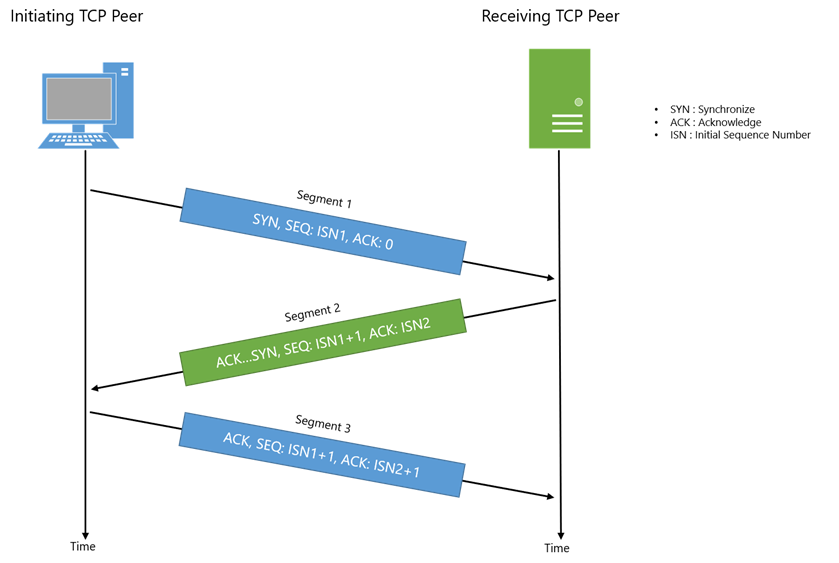
Like the road to a car, TCP was the transport to my digital footprint; traffic lights and all. Maybe I couldn’t get rid of my digital DNA, perhaps all I needed to do was delete the digital path known as the transport layer. If voyeurs can’t stream what I did last night, did last night ever happen?
Everything turned out fine the next day. If my friends and co-workers viewed the previous night’s events, they didn’t say anything about it. But that’s what got me thinking about killing off TCP. Born in the 80s, TCP had been the dominant digital communications transport my entire career. Novell had its day in the sun, as did Microsoft, but mostly only on local area networks. Cisco collapsed the backbone into IP packets routed over TCP and it’s been all the TCP/IP stack ever since. For decades.
The problem with TCP is latency. TCP Rate = Maximum Segment Size / Round Trip Time. Round Trip Time (RTT) is latency. Measured in nano or micro seconds on a computer but over the WAN, measured in milliseconds (ms). Latency is mostly distance. The medium matters; air is faster than glass, glass is faster than copper, but theoretically, bits travel at the speed of light, so a satellite hop (round trip) is about a quarter second, or 250ms. Note in the algorithm above that this distance metric is in the denominator of measuring TCP throughput, so the farther the distance, the lower the throughput – by design.
The last significant improvement to the TCP spec was in 1984, where version 4 was developed to mitigate the effects of congestive collapse on the network. Given that rate of innovation, TCP needs to just die. And I think TCP did die this week. It’s being replaced by the Remote Direct Memory Access (RDMA) protocol. The RoCEv2 (pronounced Rocky v2 for RDMA over Converged Ethernet version two) protocol can transport RDMA frames over an IP header and UDP, but Vcinity has a proprietary implementation where they encapsulate the RDMA frames in an IP header for WAN routing and add their own algorithms for flow control and packet loss recovery. The result is an order of magnitude improvement over TCP in throughput.
Think about that. In tech, an order of magnitude improvement generally equates to disruptive technology. A product killer. TCP’s days are numbered.
A Go Bag is an emergency-preparedness bag that you pack in advance, but hope you never need. That description, definition, is plagiarized directly from wikihow.com, where you can learn how to make your own go-bag. Their advice on what food to pack is ridiculous. I’ve done enough backpacking to know. You don’t buy a can of tuna. You buy these Bumble Bee tuna lunch packs. Depending on your vices, Starbucks Via Instant Coffee is also brilliant.
I watched Sean Penn advise America on TV the other day that we should all have a go-bag ready as part of our pandemic preparedness. He said smart Californians already know this, for when the big-one hits. With all the backpacking, hiking the 500-mile Colorado Trail with A Lo Hawk, aka La Plata, the international travel as an IT hit man, and the Covid-regulated, guest-living I’ve been doing this year, with all that, it’s fair to say I invented living out of a go-bag.
I could tell you how much experience I’ve gained over the years, but honestly, I think most of my efficiency gains are the result of improved tech. I recall the strap to my computer bag breaking as I climbed the stairs to the second deck of a ferry, crossing Sydney Harbour to Manly Beach. It was a quality bag, but no match for the stresses of my network cables and scores of 3.5 inch floppy disks needed for emergency reinstalls of the prevalent operating systems of the day. It’s crushing weight nearly broke my foot. I now carry a billion times more data, at a fraction of the weight, in the form factor of a USB drive.
Nowadays, I carry two MacBook Airs, one work, one personal, an iPad, some adapters and USB drives, and a copy of my latest novel to gift to whomever I chat up on the flight. My current laptop bag has survived under this improved load the last fifteen years. My back is doing better as well.
I’ve been shuffling back and forth between Colorado and Texas all year and virtually living out of a go-bag. While I’ve expanded my real estate on the remote end of that passage, stocking clothes and toiletries, I can sometimes travel with just the laptop bag. I can leave behind most tangible materials, even most of my data is in the cloud, but I find that I still need to carry compute resources – the requisites to stay connected.
But I must say, I feel stealthy when I travel. I have a bit of an imagination and sometimes pretend I’m a spy as I travel through airports. I fancied myself Harrison Ford in Blade Runner during this recent jaunt through ATX. Maybe that makes me weird, but what goes through your head when you travel? Got a go-bag ready for when you have to self-isolate?
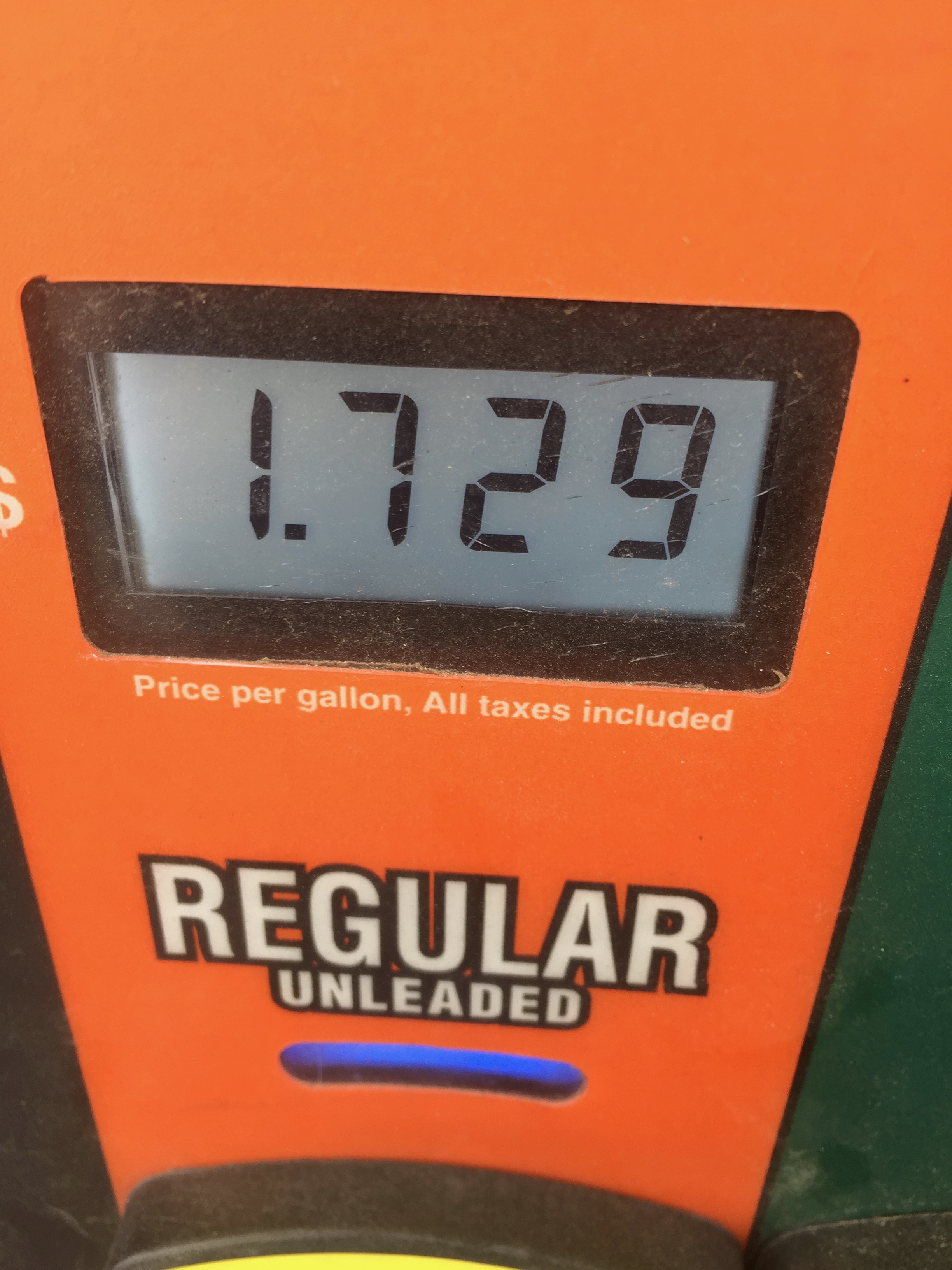
Not enough is being written about this story. I just paid less for a gallon of gasoline than I did my senior year of high school. Maybe not adjusted for inflation, but this is a running blog. Go to economist.com if you have higher math expectations.
I also ventured out to the grocer – HEB on FM620. I was hesitant after all the stories I heard yesterday about zombie hoards butchering one another over diet coke and almond milk. I’m paraphrasing my brother-in-law from his recent experience at the HEB in Northwest Hills.
The shelves were half empty but the masses were absent. They likely ran out of real estate to store more goods. I felt almost guilty with some of my purchases. I tried to make good decisions. In the end, I hoarded Malbec and after-shower conditioner. I love how Texas grocers sell wine. I’ll weather this storm.
Just when you thought you were safe, talking to people…
It’s possible to pair public information about yourself with private information about yourself – to de-anonymize the data with a strong level of confidence. And if you can do this yourself, so can others, to your personal data. If anyone can find some studies that prove me right, post links in the comments. Otherwise, it makes for a better story if you simply assume I’m right, as you read the rest of this blog post.
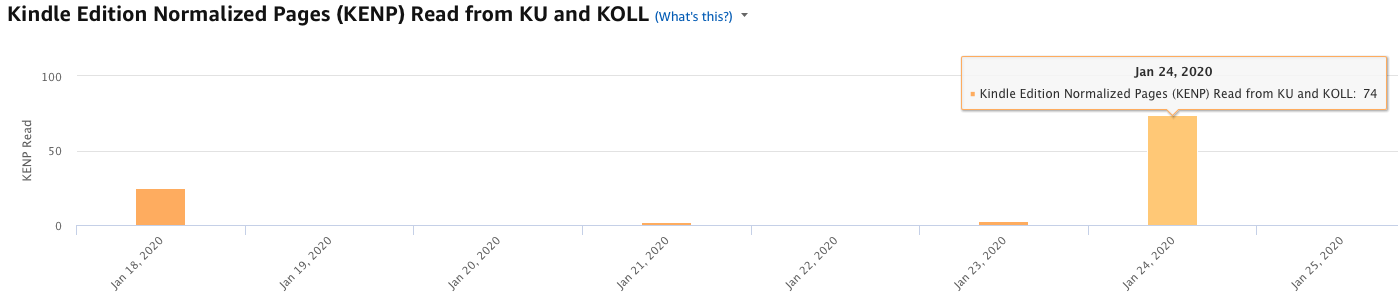
As evidence, I offer you this graphic of my pages-read stat from Amazon. It shows two pages read on Tuesday and three read on Thursday. First thing about those numbers is that they are atypical.
Typically, my pages-read stats are zero for longer stretches of time. Then, when they are not at zero, they hover around 25 or around 100. Apparently, Kindle Unlimited readers average 25 pages read in a day, on the days they read. Maybe some also average 100 pages read, or maybe there’s yet another reason for that lesser cluster. I don’t know.
I do know who that reader is, because I talked to him on both those days. He told me what he read. Good ‘ole HUMINT. The benefit of my super low stats, is that I can easily correlate what he told me with what I see in my stats. I know that every move on this trend line is my collaborator reading my book. Imagine the fun I could have.
I could post his progress online, in this blog, for the digital world to see. I’m correlating two sources of his digital footprint, one gathered from a public conversation, the other obtained from somewhere else his tracks are being published, seemingly anonymously – Amazon Books.
I was able to de-anonymize my Amazon author stats out of the law of small numbers, in my case, typically zero, then only two and three, and because the reader told me he was reading pages. Because I know these stats are his, I can assume pages read in subsequent days where I don’t talk to him, will be his. Net, net, I will know his reading pace. I’ll know if he finishes the book, with further correlation with what I know to be the book length.
I don’t think he’s overly concerned. I showed him what I was doing. His response? “Privacy is a thing of the past.”
Is that true? Is security really any more complex than other IT disciplines? More so than virtualization? Or AI? No, it’s not. It is different.
I ask this question of myself, as much as whatever audience reads my blog, because I’ve encountered this for so long at different companies where security is a subset of a larger portfolio of products. The argument is that security is too complex for sellers. Subsequently, additional skills are needed to assist the seller to close the deal. That part might be true, but sellers should have the confidence to begin a security discussion on their own.
I found this argument especially ironic when I returned to work for a telco. In my mind, telcos invented security. I was a firewall admin in 1994 when some AT&T gentlemen, Cheswick and Bellovin, published Firewalls and Internet Security: Repelling the Wily Hacker. As a firewall admin, that was my bible. I can speak first hand just how deep the security skills are at telcos. Still, the sellers there, as much as anywhere else, tell me they find security complex.
There are two reasons sellers perceive this. One is the specifics around deploying a security policy. The other is culture.
A telco seller slinging circuits encounters many complexities in the turn-up of his or her set of products. Very often they are coordinating the activation of an MPLS circuit – which they might call IP VPN. A product name that drives some security people nuts and could be a topic for another blog. Back to point, the seller might attach a managed firewall deal with the circuit, and have it provisioned to include an intrusion prevention system.
The complexities associated with tuning firewalls and intrusion prevention systems could be true for the security policies with other security tech, but FWs and IPS are examples I’m most familiar with. Ideally, the implementation process will take three weeks. Could just as easily take three months though, after the turn-up of the circuit, before the seller can commence billing on the deal. Why is that? Security must be more complex.
The issue is that customers don’t always understand their environment. They don’t know all the valid applications communicating to and from their premises and the Internet. Implementing a security policy that blocks all traffic not explicitly allowed is a discovery process. For the seller managing the customer relationship, having to explain why the IPS pattern-matched their nightly data backup routine as a DoS attack, security is complex.
I’m theorizing more on the culture aspect, but I believe it’s equally responsible for the perception of security complexity. There are two types of security experts. Chris, who served in the military in Signals Intelligence, advanced to special forces, then transitioned to the commercial sector with a stint at the NSA before joining a major MSSP, represents a formidable talent. The Colonel Flag type, he could tell you, but then he’d have to kill you.
The other type is Jen. Her office bookshelf is stacked with technical journals and her Goodreads bookshelf is also ninety percent nonfiction. She dresses in khakis and a white button-down. The Cult-of-the-Dead Cow Type can recite the baud rate of every modem she ever used for her CompuServe subscription before the Internet was a thing.
Chris and Jen might not attend RSA, but they never miss BlackHat or DefCon. They learned their tech the same as everyone else, on the job. But they spend extra cycles reading SANs security newsletters, and listening to podcasts like Security Now and Colorado=Security.
Chris and Jen belong to a community. You see this in some other industries, but it’s rare for other IT disciplines. Even the programmers’ groups on Reddit are half made of these security experts. Disaster Recovery experts don’t meet up on weekends to shoot guns at the range.
This community isn’t impossible to join. Chris and Jen drink beer and are as socially inclusive as database architects. But security is more than just a job to them. A career might be the correct word, I feel there might be a better one. There’s a reason Chris and Jen are experts.
Since I’m taking liberties with stereotypes, let me say that Sellers listen to podcasts more than any other humans. Consider listening to one of the two I linked above. You’ll find the content engaging. And be comfortable starting a security conversation with your clients. Let them know you have Chris and Jen on your team to take the discussion further. It’s not hard.
I’m sitting in an ATX bar drinking 512 IPA near gate 23, listening to live music. If that makes you jealous, I won’t get home before midnight. But what a week.
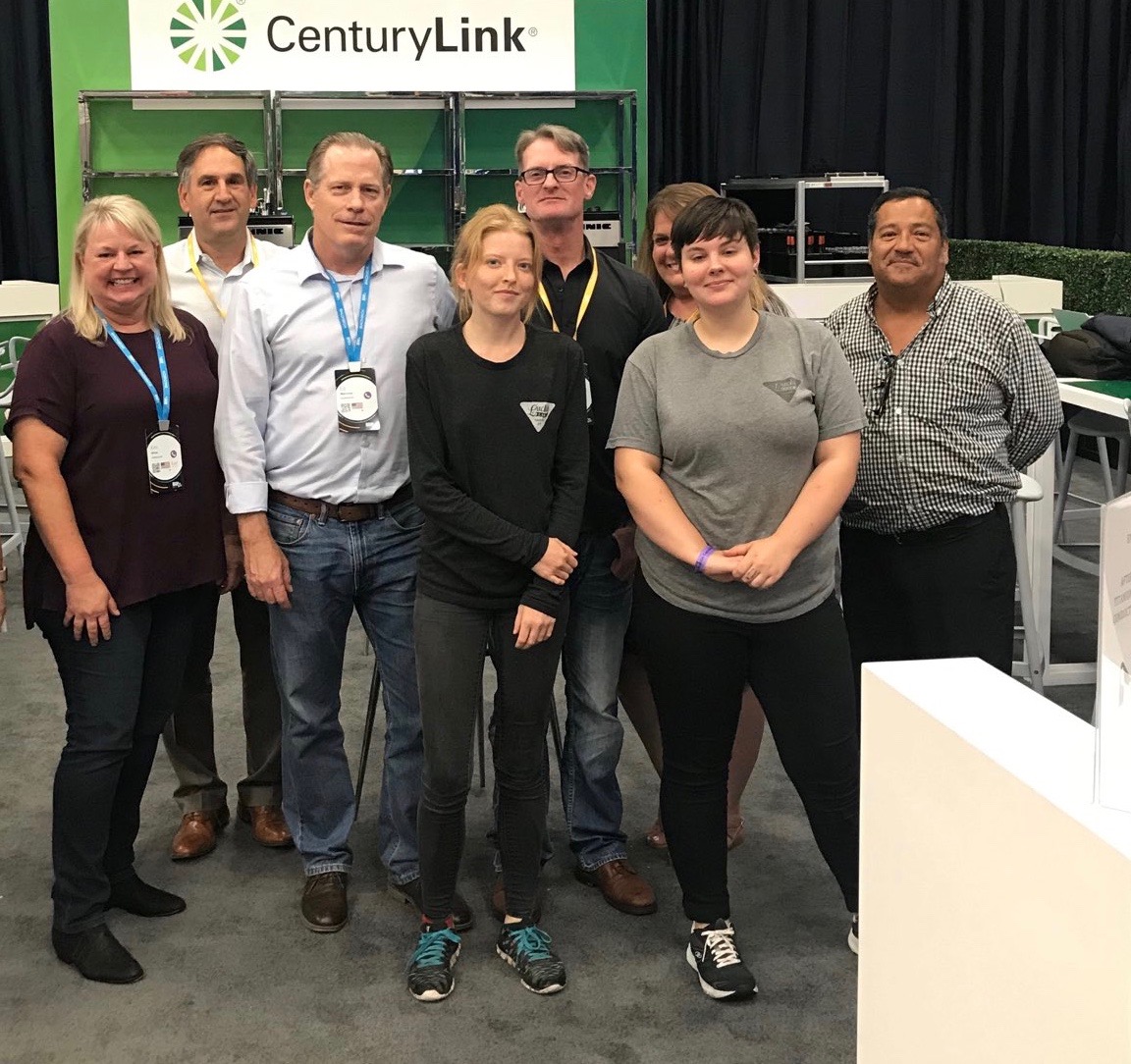
I was a booth babe for my company at the Palo Alto Networks Ignite 2019 User Conference. It was a cool setup because it was less booth and more coffee shop slash drinks after five. If that wasn’t enough to draw people in, and it was, I was signing promotional copies of Full Spectrum Cyberwar.
If it confuses you that I would be both working for my firm and at the same time self-promoting my book, I can explain the joint-marketing/co-branding concept to you in one word – LinkedIn. If you need more words, my original content drew people into the booth. My authenticity with a signed book increases customers and potential customers’ commitment to my firm. It also lubed the conversational skids. That helps my firm and for me, hopefully, a percentage of them will buy my first or future-3rd book.
The vendor took care of me and my crew with an over-abundance of high-quality meals near the Austin Convention Center. And when it was all done, I met my friend and neighbor, Steve Wolfe, also working in Austin at the time, and my brother-in-law Steve Collier, at Tomos for the best sushi on Parmer Lane.
I’m exhausted and won’t get home before midnight, but I’m drinking 512 IPA, listening to live music, and I’m good.
This is getting creepy. Am I the only one Facebook notified that today is International Left-hander’s Day? On the other hand, this exceptional profile accuracy renews my faith in the omnipotence of their algorithms. If their AI knows I’m left-handed, then they should be able to resolve this Russia thing.
As much as I appreciate the recognition, I can’t pretend to understand the value having this day brings to me. No doubt, extensive lobbying went into making this day available to us lefties worldwide. Not sure I’d give my right hand to keep it, but I wouldn’t give it back.
I will say this. In fact, I’ll let my future son-in-law say it for me – visually – captured here as I was spying down on the city of Telluride. Whether you’re AI, or a bot, or some photo-opportunist, I know that you know that I know you’re watching me.
Pretty sure I blogged late last year on my plans to buy Bitcoin. I finally got around to doing that a couple of weeks ago. I don’t care to start conducting transactions with virtual currencies. This story is the best of many I’ve read that details exactly why virtual currencies aren’t really a thing yet, and won’t be for some time. Perhaps not until quantum computing becomes pervasive. I’m doing this for the experience. To be able to relate accurate details in my next novel. I referenced a bitcoin transaction in my last book but I glossed over the details. One can’t write a tech thriller on cyberwar without speaking to virtual currencies.
I won’t go into too much detail here on my experience. I think I’ll mostly provide links to some of the best stories I’ve discovered, and you can click on them if you’re interested. I actually repeated a number of stories from my ten years of blogs in my last novel, and I will again. So writing this post is more about building my reference library of content for book two than anything else. Some of this will be useful to you if you are considering purchasing a virtual currency.
Since my goal isn’t becoming rich, I only purchased $100 of Bitcoin. I wanted to invest just $5, and that’s an option, but there are transaction charges, and it occurred to me it’s more easy to do the math on $100. It’s quick for me to understand the $2.99 cost of buying my $100 of Bitcoin is basically 3%. I’ll incur similar future transaction charges and they would all be much more from a percentage perspective for only $5.
My first step was to read the Internet to understand how to begin trading Bitcoin. I discovered I needed to register at an Exchange. I settled on Gemini because it seemed the most professional to me. It’s run by those Winklevoss twins whom successfully sued Mark Zuckerberg for a substantial share of Facebook. After registering nearly two months ago, the Winklevoss twins still have not completed verification of my identity. They did contact me once to inform me that my drivers license photo was too blurry and that I should resend it. I did. Nothing but chirping crickets since. Seeing this as a red flag for future customer service interactions, I signed up with Coinbase – which is probably the most popular exchange. Took a couple of days for verification, mostly because I did it over the weekend. Go with Coinbase.
My research indicated that one should not leave their virtual currency sitting with an online exchange, given the history of these places having their reserves constantly hacked. North Korea’s Icarus has made attacking exchanges their specialty of late. Icarus is the modern day Bonnie and Clyde.
So I purchased a digital wallet. I think I blogged on this already too. I received the Nano Ledger S as a Christmas gift. It’s pretty cool. Cost about $79. Another reason why purchasing only $5 would have been stupid. The idea is one can transfer their Bitcoin from an exchange onto the digital wallet to avoid being hacked. It’s mostly offline and connects to your computer via USB when you use it. Transferring Bitcoin is essentially a copy/paste process. Very easy to understand YouTube video here on how to do that between the Nano and Coinbase.
If I’m honest, using digital currencies is fairly complex. But for a techie, sort of fun. I created an account for myself at Bitsane too because I want to trade my Bitcoin for Ripple – another virtual currency that banks are starting to use. Even more complexity as one cannot directly buy it. Rather, you have to exchange Bitcoin for Ripple. Yet more complexity.
There is nothing simple about trading Bitcoin. It’s not something one can easily do from their 401K account. But I’m a writer and my genre of tech thriller encumbers me to actually know what I’m talking about. Fiction allows me to take some liberties, but readers of tech are interested in detail like this.
My Bitcoin stash is currently worth $130, after a single week. $10 of that came from purchasing it from a recommendation, which you can do too from this link. It will give you a quick 10% return on $100 transaction. You and I will both get $10. Seems like a better business model than actually trading Bitcoin.
My friends think I’m technical. I suppose compared to many of them, I am. I would argue that ten years in personnel management killed my skills at the command line, but it’s all relative. I just built a website for my novel. I probably sound like a techie having just done that, but hear me out.
This morning, I built a decent web site for a book I published over a year ago. Okay, so maybe I am technical, but lazy? No, I tried to build a website earlier, it just sucked so badly I never really launched it. Ultimately I deleted it. And this is the point of my post, where I share my writing experience for other aspiring self publishers. I built that first website with GoDaddy. GoDaddy leverages WordPress for their platform. Software that competes with Microsoft for the highest number of known vulnerabilities. It’s so kludgy to use, I’m at a loss for words. I could never get it to look how I wanted. I couldn’t even use my own fonts. That’s a big deal to me because I like to use a stencil font to give a military air to my book. Think MASH. I’d show you but this blog is on WordPress so I can’t.
It was my 15 year old daughter who talked me into using WIX. I’m a happy camper. Took me less than an hour to have everything looking how I wanted. Much less than that to launch it but then I tweaked things for over half that time because I was having fun. WIX even provides simple-to-use email subscription forms. Everything was so easy, a writer could do it. I’m not just being funny there. My experience meeting other writers is the majority of them are barely technical enough to format fonts in a Word document. They refer to the people who publish ebooks as ebook coders, like it’s actually software development to publish a book in electronic format. I’ll admit, it did take me about twenty hours of YouTube videos to learn Adobe InDesign, but seriously, it’s not coding.
So, if you are an author. One of those writers who is just savvy enough to download Scrivener but not clever enough to integrate file sharing with DropBox, then Wix is for you. Trust me, stay away from GoDaddy, it’s a POS. That’s “Piece of Shit” for you non techies who shy away from acronyms and can’t RTFM.
This is a bit geeky but I want to share some of my lessons learned as a survivor of the indie publishing process. This mistake cost me some money because I bought a handful of books to sell on consignment at a local bookstore before discovering this problem. The issue was some of the text in my book was a lighter shade of black than the rest of the text. I had two shades of black. Turns out, there are maybe 1004 shades of black.
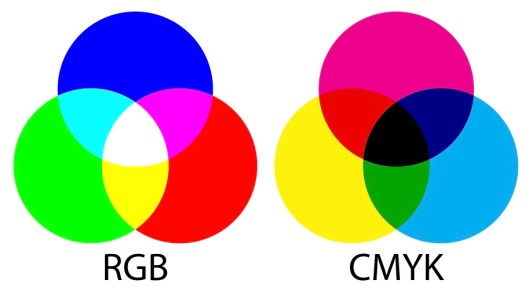
RGB represents the three primary colors of red, green and blue. Computers and TVs, essentially all monitors, output color in RGB because they are working with light. Think the colors of the rainbow. All the colors of the rainbow combined are white. You see the white in the middle of the RGB Venn diagram above. Conversely, when there is zero light, a monitor screen is black. RGB is represented by 0 to 255 values for red, green and blue respectively. Based on what I just said, 0,0,0 is black and 255,255,255 is white. Microsoft Word outputs fonts in RGB because it assumes it is outputting to your computer screen. Your printer converts RGB fonts to CMYK as you print.
Which brings us to CMYK or Cyan, Magenta, Yellow and Key. Key means black because the last letter in black is “k” and “b” might lead you to think blue. Your printer isn’t dealing in light like a monitor, it’s working with ink. Think a box of crayons. You were told in elementary school that all the colors of the rainbow make white, but you could never get all your colors to come out as white no matter how big your box of crayons. CMYK is represented by values from 0 to 100. Hence, the Venn diagram above yields black for the 0,0,0,100 combination of C, M, Y and K. Black and White are on opposite ends of the spectrum for RGB vs CMYK. And they use a different amount of pixels, 256 vs 101 per color setting. Make sense?
When I had to use Adobe InDesign for my book layout and create print and ebook formats for my publisher, I didn’t know that this graphics package was preparing my fonts for a printer and converting MS Word fonts from RGB to CMYK. This alone would not have been an issue had it converted everything to the same color mode. For some reason my MS Word fonts had two different values for black. Or at least they converted to two discrete values. One was a default setting for black that InDesign calls Black, for which the CMYK values are 0,0,0,100. Or maybe 100,100,100,100. I forget but think both sets of values are equal. The second default setting was called Registration. Its CMYK values are various numbers for each of the four settings. The result is a lighter shade of black.
My publisher, Ingram Spark, which is really a distributor as I have my own publishing firm, Lobo Media, returns an electronic proof to me to look for issues with my print uploads. Had I actually printed it, I might have noticed the color disparity. I only reviewed them online though, and guess what? The CMYK values don’t contain nearly as many pixels as RGB, think 100 vs 255 as printing is at less resolution than display monitors, so I could not discern the disparity on my screen. It shows up in ink on paper, but not on a monitor.
I think the lesson here is to print out at least part of your proof to look for printing errors. I’m blogging this because it was a topic of discussion at my book signing Thursday night. I signed and gave away my leftover copies that contained the misprint. They are totally readable, but flawed. While Karen was walking around assuring everyone that the kinky sexual preferences of the book’s protagonist were entirely fiction, I was having conversations on color mode.
FBI Director James Comey testified to Congress today that encryption will end law enforcement’s ability to perform their job. He suggests that the FBI’s primary tool is court orders to search for information, and he makes the general assumption that data is never accessible once encrypted. To paraphrase, encryption leads to information “going dark” for the purpose of public safety. As if encryption is game over for the FBI. This reminds me of a famous quote (famous misquote actually as I don’t believe this is true) attributed to the Commissioner of U.S. Patent and Trademark office Charles Duell when he purportedly quipped, “Everything that can be invented has been invented.” Comey seems like a decent guy but suggesting that the FBI requires clear text access to American’s data because the court order process is predicated on this is disingenuous. The FBI has an obligation to keep up with technology.
I stated in my previous blog on this topic that cryptography and cryptanalysis have been playing a cat and mouse game throughout world history. So let’s review that, because I believe government is obligated to defeat encryption technologically rather than by eroding America’s privacy laws. To be fair, I recognize they are currently playing catch-up. Consider that cyber crime is nearly a half trillion dollar market. Security products and services are well under $100B market. Meaning we are applying $100B to the good side and cyber criminals are making $500B. So I can sympathize with Comey. The bad guys are winning.
Understand the etymology of these terms. We began by covering up secrets. For example, Histaiaeus, in the 5th century BC, wrote his message for Miletus to revolt against the Persian King on his messenger’s shaven head. He then waited for his messenger’s hair to grow back before sending him on his way. This was before instant messaging. A similar technique was used in the latest version of Mad Max. “Steganos” is Greek for “covered” while “graphein” is the Greek term “to write”, hence steganography means “covered writing.” So steganography was the art of covering up a message. It goes without saying, one didn’t necessarily have to be a rocket scientist to be a code breaker back in the day.
The art of secrecy evolved to hiding the meaning of the message, rather than simply covering up the message itself – with the understanding the message will likely be discovered eventually. The Greek term for “hidden” is “kryptos”; hence we use the term “cryptography” which we now practice with encryption. The picture above is of a 5th century Spartan Scytale that transposed the position of letters to hide the meaning of the otherwise open message.
Technology advanced and today one does have to be a rocket scientist to be a code breaker. Bill Gates was quoted by Representative Bob Goodlatte (wonder if he owns shares in Starbucks?) in today’s Congressional Hearing as suggesting Quantum Computing will soon be powerful enough to break any encryption. I don’t know about that but point is technology does eventually catch up in this cat and mouse game. Consider the plight of Mary, Queen of Scots.
On trial for treason, her prosecutor, Sir Francis Walsingham was also England’s Spymaster. Sir Walsingham first captured Mary’s correspondance, which she hid inside the hollow bungs that sealed barrels of beer. This was steganography. But Mary was clever and further used a cypher to hide the meaning of her correspondence. Sir Walsingham engaged Thomas Phelippes to perform the requisite cryptanalysis and ultimately succeeded in proving Mary’s guilt. The rest is history. Point being, Cryptanalysis was on par with the cryptography of the time. Fast forward to WWII where the British successfully decoded the German’s Enigma with the use of early computing technology. So Bill Gates might actually know what he’s talking about.
I’m in the cyber security industry and agree with Comey that the bad guys are winning. For now. Still, I’m not willing to surrender any more rights to privacy than have already been suspended post 9-11. Technology will catch up.
I understand everyone believes there should be a balance between security and privacy. Seems sensible. Bill Gates came out today in favor of the FBI over Apple, but then he’s been making business decisions counter to consumer needs for decades. I myself am so impassionately middle of the road on most topics that I wonder sometimes if I’m not actually dead. It’s great when everyone can win a trophy but you cannot avoid the reality that there are winners and losers. I believe the current Apple/FBI debate is one of those binary scenarios. It’s as difficult for me as anyone else to plant my flag when I want both privacy and security. The following example though helps clarify my position.
The 4th Amendment provides both privacy protection, and presents the guidelines for the State to void those privacies given reasonable cause. Assuming proper due process, the State wins. This is a nice template for balance, but it doesn’t stop there. The 5th Amendment protects us from self incrimination. “I plead the 5th.” Taken together, people must allow the State entry into their home for a warranted and reasonable search of evidence of a crime. However, people are not obligated to point out where they hid the evidence. “Oh, it’s under the seat cushion.”
There are two centuries of legal precedent supporting these Amendments to where most of us are fairly knowledgeable of the rules, without being actual lawyers. Let me dumb this discussion down though even further. Let me use the term secrets instead of privacy. We all have secrets. Not just our banking PIN code but family history and deep, dark fantasies. I know that there are things I would never consider telling anyone, and I’m about as transparent as a person can possibly be. Have you read my prostate chronicles? I might be wavering a bit from the core Apple/FBI topic since not all secrets necessarily contain criminal content, but I believe the principle points remain intact. I’m allowed to have secrets.
I’m not even that strong of a privacy advocate. See above on my middle of the roadness. For example, I don’t consider privacy an inalienable right. We were born naked in a garden, so God wasn’t that big on personal privacy either. Clearly, there was very little personal privacy when we were living together as tribes in caves. But like anyone else in western civilization, I’ve grown accustomed to certain privileges and I do want privacy. Even if I didn’t, the information age ascribes so much value to data integrity that encryption is paramount to how our society and economy function. It’s not until I substitute the word privacy with the word secret that I begin to understand where I fall on this topic. The State can try to search but I can try to hide. Tell me I’m wrong on this.
Cryptography and cryptanalysis have been a cat and mouse game played throughout millennia. Technology plays the lead role. I understand that if the State can decrypt my communications, they already have legal justification to do so. My information is only as safe as my encryption is strong. But if they can’t decrypt my data, I don’t have to hand them the keys. That’s like showing them the evidence is hidden under the seat cushion. And they can’t outlaw encryption. That’s like saying I can’t have secrets. Who doesn’t have secrets?
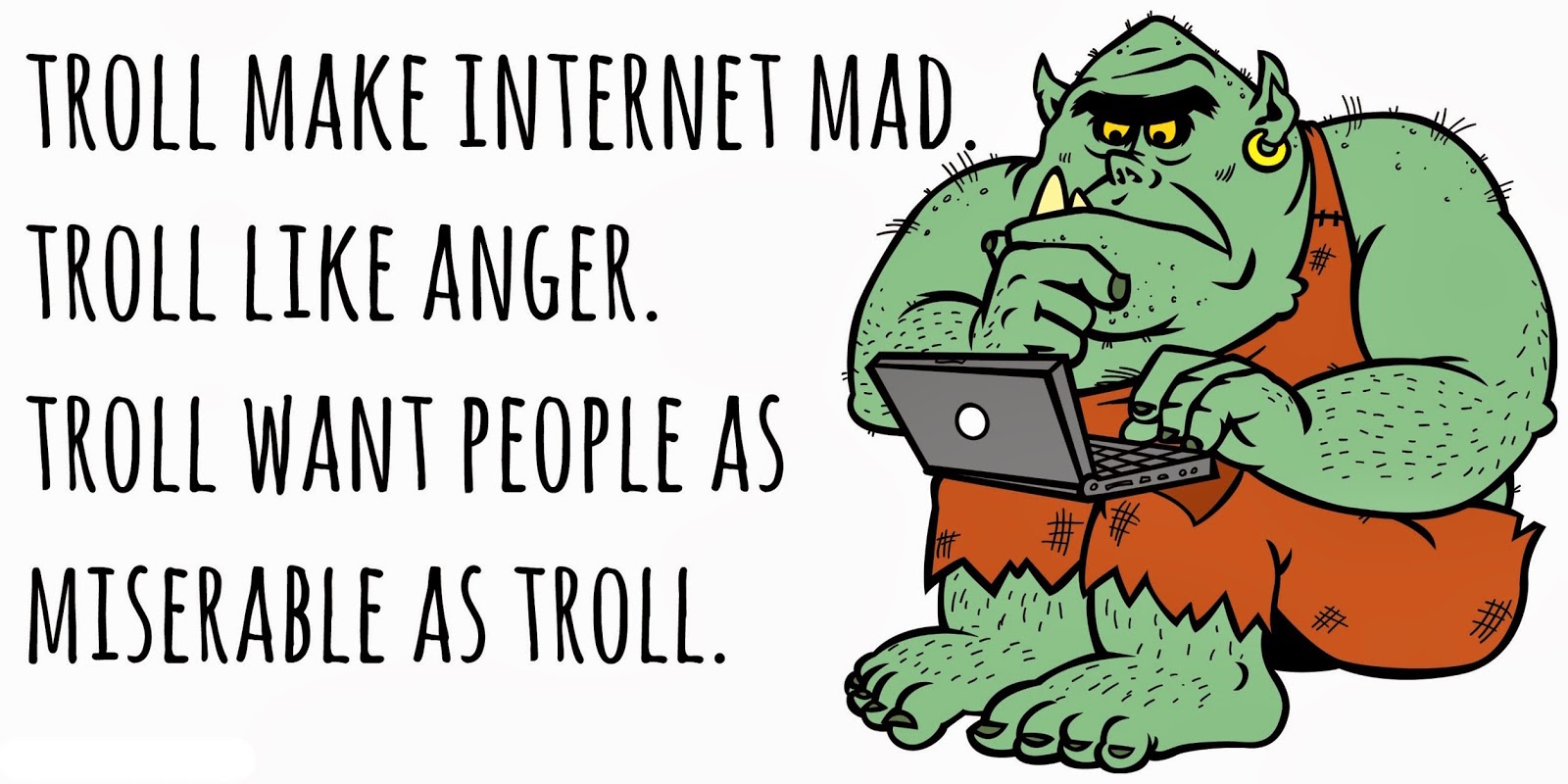
What’s a troll? Most people understand trolls come from Norse mythology and you probably picture one exacting a toll from anyone trying to cross its bridge. So then, what is trolling? The bridge toll metaphor extends to some asshat commenting ugly remarks on your social network.
Why do trolls do this? I don’t know but there is extensive information on the psychology of this habit online if you google the topic. Trump’s tweets border on trolling. My goal here is to put you at ease with social networking, despite the trolls and seemingly dangerous personal privacy concerns.
I see this message as important because the vitriolic rhetoric has been increasing lately on the social networks I participate in, and I don’t see the noise abating anytime soon. Not with us entering the final throws of an election season. And I don’t want my friends and family psyched out and tuning out. I know you probably only want to see pictures of your grandkids. It irritates you to get friend requests from friends of your kids whom you don’t know. Do what I do. Accept their requests out of politeness and then immediately unfollow them. That way you will never see their posts. They will still see yours’ but only if you actually post stuff and many of you don’t. This is also important because social networking is not going away.
My comfort level participating on the Internet might be partly my personality but I suspect it mostly stems from my job. My I/T career put me online. Before the Internet, I was on CompuServe. Online communication is the company culture at IBM. That was curious to me when I joined IBM in the early ’90s because I came from the phone company where we never answered email. We were all about voice mail. Now everyone is on email. Remember “You’ve Got Mail” from 1998? We’re way past that now and today we are all on Facebook. 1.55 billion of us at last count. The Internet only has 3 billion users so that’s like saying half the world. It’s nearly a quarter of the real world.
Let me digress even further, although I promise this is relevant to my point. Walter Cronkite is often associated with America losing the war in Vietnam. The phrase, “the Vietnam War was lost on television” came from Marshall McLuhan. It’s probably also fair to say that Carter lost the Hostage Crisis on television, to Ted Koppel. And the first Gulf War was won on television with General Schwarzkopf and CNN. And then came the Internet. McLuhan’s other popular phrase is, “the medium is the message.” I suspect you are way ahead of me by now and I probably don’t need to even say this, but the war on terror will be fought on Facebook.
We’ve all seen this war playing out on Facebook over the last couple of weeks. The online social medium changes our experience from the television in our living room to our mobile device or desktop computer. Facebook is just another channel like CBS News, but with one important difference. It’s more immediately participatory. What do I mean by that? TV, then and mostly still, is a one-to-many broadcast. Within a few years, by merging picture-in-picture (PIP) technology with the Internet, it will more closely resemble Facebook, which is a many-to-many broadcast. A party line. Know that the speed of the Internet adds velocity to the spread of ideas. Including bad ones.
So the Internet and social networking has extended your living room to a much wider audience. To the entire world ostensibly although really just to your online contacts factored by some multiplier of your friends’ friends. Unless of course your big game hunting photos go viral. And this makes many of you uncomfortable.
Doesn’t matter how uncomfortable you are. You have a role to play. Let me explain the 1-9-90 rule. It’s sometimes compared to the 80/20 pareto principle, although I would argue it’s much different because everyone participates in 1-9-90. I first read about it as part of teacher education studies. Let me start with that example. In a classroom, there is one teacher producing all the content. A handful, 9%, comment by raising their hand and asking questions. The point of the teaching studies is that the remaining 90%, sitting contently and following the conversations, are still participating. They learn by listening to the question and answer. Maybe they listen in math class, but ask questions in social studies where they have more confidence on the content.
Do you ever post content? Are you the 1%? The teacher? Do you ever comment? Are you the 9%, at least on some of your friend’s content if not to every post? A like is the same as commenting. I post content. Much of it is via my blog and I leverage various social networks as distribution channels. I think I prefer blogging for its ability to format text and pictures. People quick at observational humor are good on Twitter. I’d probably pay to subscribe to my sister-in-law’s tweets, she’s that clever.
Doesn’t matter if you aren’t the 1%. Don’t feel obligated. My focus is on the 90%. The 9% are still contributing, perhaps even with original content. This is where trolls tend to play, although trolls can be found in the 1% too. I suspect most of them are too dull though to produce original thought. They are nothing though if not confident and steadfast in their beliefs. I try to avoid trolls but will find myself in heated debates with marginally more cordial but equally unyielding commenters.
I never actually care about winning a debate with the commenter though. I don’t expect to change someone’s fundamental beliefs. Not without hitting them over the head with a hammer. My audience is always the 90%. The much larger audience reading the comments. Some are still forming their opinions. That’s why they’re reading the comments. They find it interesting. And that’s why it’s important to remain respectful and if possible, write well-reasoned arguments. But for the 90%, not the 9%. Screw the 9%, they’re a bunch of asshats anyway. I would know.
Sorry this post is so long. I have the day off from work. Do you see where I’m going with this? You might not be an original content producer. You might not even comment. But you are being influenced by online commentary. I can say that because you’re reading this. I can even suggest you might be more influenced online than by your television because this year Cyber Monday might just exceed Black Friday purchases. Don’t be a troll, but don’t get turned off by all the rhetoric either. Understand that you’re a participant whether you comment or not. The world is a stage and you’re on it.
It feels disingenuous to write about running considering I can’t remember the last time I ran. A good two weeks ago for sure. I could talk politics, my undergrad was poly-sci, but am a little burned out on that topic. I’m hoping to be able to lay low on my political views until maybe the Iowa caucuses, when polls start to actually matter and he who shall not be named will begin to fade. So let me tell you about my new car. I mean my new used car.
We traded in our mini van for yet another mini van. Same model – Honda Odyssey. As unremarkable as that sounds, we bought one that isn’t much newer either, in terms of make. It has half the miles and the annual service costs will be significantly cheaper. That’s about it. We bought used because I’m not certain I can afford a new car. I could lease one but I’m not totally on board with that concept either. I’ve yet to come to terms with paying for a car what I paid for my first house. Am I the only one to feel this way?
We’ve always bought new cars in the past but I just can’t do it anymore. Actually, I bought my last car used too, for Brittany. I’m not all that convinced I even need a car. Right about now you must be thinking I’m a cheap bastard, but I seriously don’t think I need a car. The mini van is for Karen. We only have one car. I’ve been working from home for the last 7 years and most everything I need is within a 3 block radius. My friends. My doctor. My chiropractor. Restaurants. Coffee shops. The bottle shop. And for anything I can’t walk to, I have wifi. Suburbs are for suckers. And car owners.
I’m beginning to sense this might sound like a rant that makes me appear poor. And I understand the Facebook convention is to post content that makes me look rich and successful. I invented social networking so don’t tell me what to post. The average price for a new car costs more than a 4 year college degree, and everyone’s complaining about the price of college. I’m telling you this is an issue.
For my part, I’m holding out for as long as I can to own a single car. The bus picks up right outside my front door. I’m a big Uber fan and occasionally I rent a car if the need arises. Cheaper than a monthly car payment. I understand there is a trend that forecasts people will stop buying cars. Uber is termed ride sharing while short-term (as in hourly) car rentals is called car sharing. It’s an urban thing. I have a neighbor who lets me borrow her spare car when the need arises. I’m at the forefront of car sharing. And I score bonus points for minimizing my carbon footprint. Am I alone on this? Or am I just cheap?
I’m not happy about this. Three of my five iPhones are under the grandfathered unlimited data plan, so my increase will actually be $15 per month rather than just $5. But the lying marketing doesn’t stop there.
AT&T stopped offering unlimited data plans a couple of years after the initial iPhone launch, and that’s technically a price increase. It’s why I pay more for my two other iPhones. My perspective is of a single payment plan, not a single iPhone.
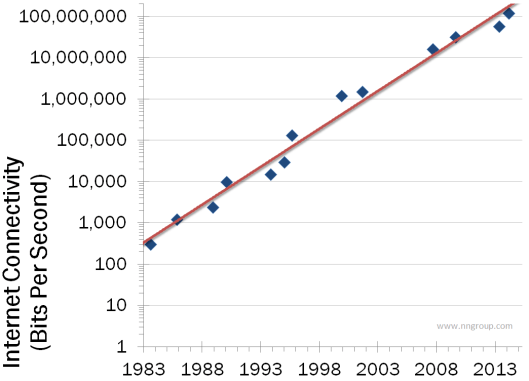
This is technology. Prices are expected to go down, not up. So bragging about their first (but not really their first) price increase in 7 years is bullshit. Network bandwidth and speeds benefit from a phenomenon similar to Moore’s Law for CPUs. Nielsen’s Law states that bandwidth doubles about every two years, with all else (like price) being equal.
I don’t know if there’s much I can do about this. I suspect AT&T is still my cheapest option. But I can blog my displeasure. Any thoughts? Should I switch my five iPhones?
The U.S. completed their Trans-Pacific Partnership Trade Deal yesterday. If signed by Congress, this will lower trade barriers to the import and export of physical goods. How quaint in the Information Age. Today, the European Union Court of Justice declared the U.S. Safe Harbor policy for demonstrating compliance with the EU Directive for Data Privacy to be invalid. EU 1 : Pacific Rim 0.
I don’t know of the availability of any stats that show the value of global trade in information vs physical goods bought and sold, but I’m willing to guess data is at least more strategic if not already more valuable. Explaining the details of the EU Data Privacy Directive, Safe Harbor, and this new ruling isn’t my objective here. Much of it is very legal in nature and over my head. My goal with my cyber security series is to offer a basic primer on topics I deem of interest. At issue here is data privacy, specifically personally identifiable data or PI.
My 13 year old daughter is uncomfortable with the notion that data can never be fully erased with any certainty. I don’t know why or how she developed this very specific concern, likely something to do with the proliferation of online photos. She is totally aware of the EU’s Right to be Forgotten ruling wherein citizens can demand their online references be deleted by digital firms such as Google and Facebook. Understand that the EU considers personal privacy to be a basic human right.
The irony here is in the arrogance of any U.S. citizens who think we invented personal privacy. Indeed, the 4th Amendment of the U.S. Constitution states that, “The right of the people to be secure in their persons, houses, papers, and effects, against unreasonable searches and seizures, shall not be violated, and no warrants shall issue, but upon probable cause, supported by oath or affirmation, and particularly describing the place to be searched, and the persons or things to be seized.” Or stated more plainly, “Each man’s home is his castle.” Well that was written over 200 years ago. Post-911, the U.S. has conceded leadership on the personal privacy front to Europe.
I probably shouldn’t reveal what I really think because I suspect I’m on the wrong side of history here, but I will. I don’t believe in personal privacy. I want it to a degree but I certainly don’t think of it as a basic human right. I can assure you there was little to no personal privacy when humans were living in caves. Were Adam and Eve not born naked? And yet I do like the 4th Amendment. I believe we need a balance between personal privacy and the benefits that the sharing of personal information ascribes to a society – like security. An example of that is the Patriot Act. This latest EU ruling impacts a more commercial benefit, such as advertising.
I don’t think I’m alone on this one. Anyone reading this is online and therefore highly likely also surrendering a large degree of their personal data privacy to social networks. You’ve probably granted Facebook complete digital rights to more family photos than your parents ever collected in photo albums. There are benefits to sharing. And I don’t believe we ever, ever had complete personal privacy; so I don’t think of it as a basic human right. No man is an island. In the end, I imagine personal data privacy will be determined more by technological capabilities than regulation. Your data is only as secure as your encryption. I’m interested in comments.
In case you don’t know, the cloud is a data center. Blaine Berger misses the opportunity to answer that key question for the billions of mobile users with this book, but he does speak to much more than arcane data centers. This is a primer for any budding project manager. In only 160 pages. Everyone I work with, and the other 400,000 IBMers I’ve yet to virtually meet on a conference call, should read this book.
If we can substitute the term cloud for data center, and we can, Blaine references his experiences sailing through perfect storms. Because I grew up in data centers, and should have been fired for numerous large scale outages, each story made me anxious. I found myself wanting a bigger boat before Blaine would get too far into the details of each data center move.
Fortunately, Blaine applied effective humor to calm my nerves. I wouldn’t say he used repetition per se, but his lessons built on themselves to where I definitely felt more wise by the end. Everyone who works in I/T knows computers don’t work and that Murphy’s Law is simply a warmup for dealing with the complexities of installing networks. This book advises you on how to be prepared. It’s boy scout meets geek.
I attended Blaine’s book publishing party last night at the Lola Mexican Fish House. It allowed me to network a little, which I rarely do. Although I eventually ended up ensconced at a table with four retired IBMers. Go figure. As Blaine spoke to the crowd to thank everyone, he began by stating, “We are all authors now.” The self-centered person I am, I took this as a personal dig toward my blogging. But then I learned he’s been saying this for awhile and has written several other tech books. And with scores of others in the room, it is possible he wasn’t merely talking to me.
I left the fish house for another restaurant, because I wanted to explore the Union Station area of Denver before going home. I ate a small plate of lamb tartare at Colt & Gray with a glass of Coté du Rhone, while swarms of runners buzzed past. Apparently no one runs alone in LoDo, they all belong to huge teams. I did miss my evening run for this book affair, but it was worth it. I took an Uber home after a 3 minute wait. Enjoyable evening.
I recently blogged in favor of net neutrality. To be clear, I don’t think regulation is the answer. In fact, I believe regulation is as much the problem as greedy broadband providers; but I’m against the notion that cable operators charge additionally for content that doesn’t originate on their network. Pick your poison.
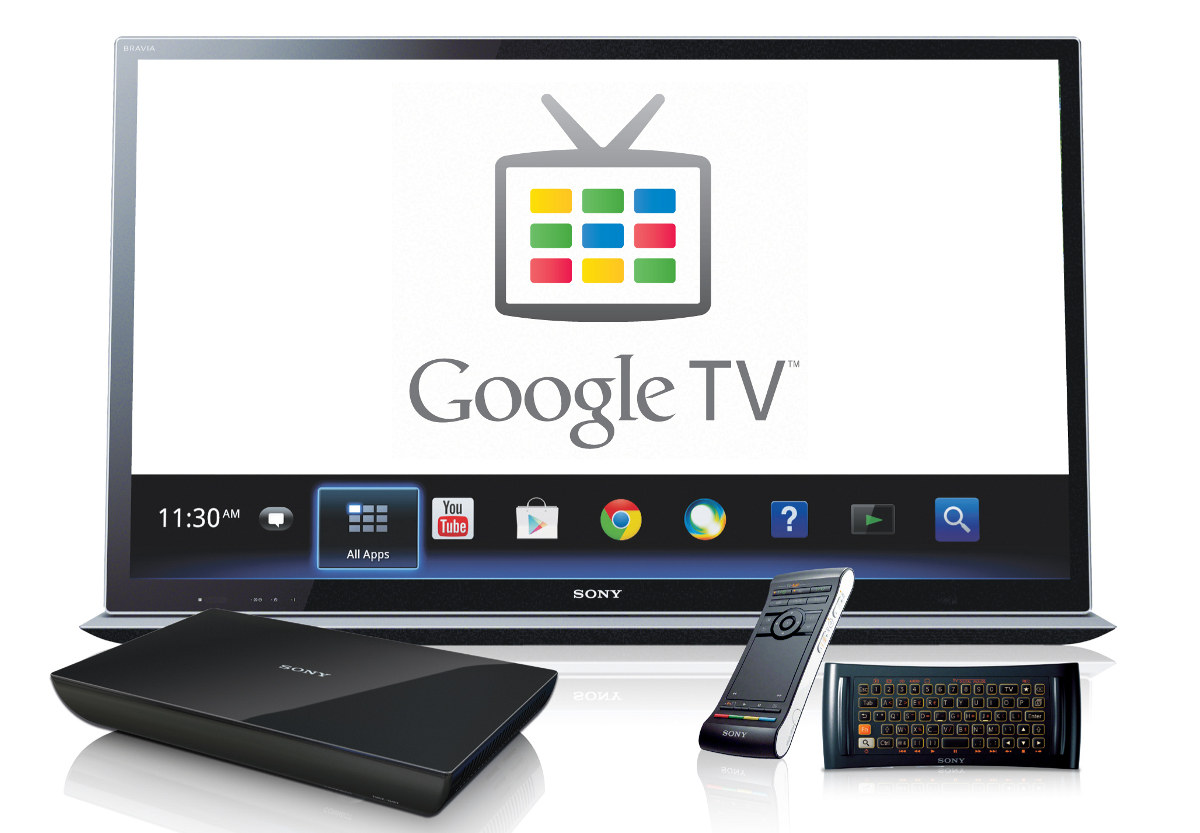
Just when you think you might understand this net neutrality issue, and be honest, you don’t, not really; a story comes out the other day about content providers actually lobbying the broadband providers for guaranteed bandwidth. The exact same thing, only the content providers are requesting this rather than the broadband providers forcing it on them. Hmm. Net neutrality was designed to protect content providers from having to pay extra, but apparently some want to. And make no mistake, these are content providers with deep pockets. Sony. HBO. Showtime. Note, they are also traditional TV content providers and not a Facebook or YouTube.
Clearly, some trend is underway to explain this. It’s easy enough to assume these content producers are positioning themselves for the eventual transition of content delivery to the Internet. That seems to be what’s behind all these related stories. Marshall McLuhan professed that all new media are destined to subsume and extend all old media, and to use the old media as their content. I’m fairly certain that if I understand what Marshall meant by this, then it would explain this transition of broadcast television to the Internet. Not that I feel any dumber than the media companies. They’ve been positioning themselves for decades with cable companies acquiring content companies and content companies merging with cable companies. And then they split up. I don’t think they have a clue how this will play out either.
But that’s their problem. I thought I would provide some details here to help explain just how certain content could be expedited by your provider. The original plan by the cable companies was to regulate the flow of Internet traffic. They can do this by tagging the data packets as they flow through their network switching equipment and assigning more or less bandwidth to the data session. I don’t know if they do this by leveraging the Quality of Service field of bits in the IP header, but there is an actual QoS field in IP headers, as well as in other transmission protocols, that can be modified for this purpose. This is how VLANs and MPLS work, if you’re familiar with those transmission protocols. They know the source and destination of each packet and they tag them to control their flow. But the recent net neutrality regulations nixed that plan.
The story I linked above is about a proposal to provide media outlets whom are willing to pay, essentially a TV channel. It would be a data service, Internet traffic rather than television signals, but carved out of a separate slice of bandwidth on the cable. They term this capability a “managed service”. It’s not clear yet if the regulators will allow it. Nor is it clear the cable providers care to offer it. But just how is this different?
A friend recently asked me to define broadband. It’s worth understanding. The term has a very specific meaning to network engineers; but about the time dial up was giving way to DSL and cable, network marketers co-opted the term to simply mean fast. It didn’t help that the FCC further diluted the term by defining it as a specific data rate. 2 or 4 Mbps initially. Just recently the FCC redefined it to mean 25 Mbps or faster. They do this to regulate the providers to be more innovative; prompting their national deployment of faster speeds because regulated companies aren’t thought to be innovative. That sentence made sense in my head, not sure it actually does now that I wrote it. Regardless, I can assure you that speed does not define broadband. Broadband is the transmission of multiple signals on a single medium.
Think of how your radio works. Or broadcast TV. Without detailing the entire electromagnetic spectrum, understand that FM radio and broadcast television operate in a frequency range from 30 to 300 MHz. You might listen to radio station 93.7. That’s a signal transmitted at 93.7 Mhz. The allotted frequency would be somewhat bigger, perhaps from 93.6 to 93.8 – I don’t actually know, but a frequency range is provided to carry the signal. In the open air, this is not considered broadband. Multiplexing multiple channels onto a single wire would be broadband, and this is what cable providers do. You de-multiplex the signals with a tuner or remote. It might help to think of the opposite of broadband. There is a term called narrowband, but in this context the opposite technology is called baseband. That is what ethernet is. A single medium with a single channel. Sort of. 10Base T on cat 5 cable is 10 Mbps of bandwidth operating over 2 twisted pairs of wire in a 4 pair configuration in full duplex mode. 1000BaseT (1 Gbps) uses all four wire pairs. This gets complicated but those 8 wires are considered a single medium and transport a single channel. Take from this that if you have 5 computers in your house on ethernet, they each take turns to communicate. Very fast turns, but they are sharing a single channel, and the more computers running on that ethernet, the slower your potential speed.
Broadband transmits multiple signals, or channels, on a single medium. It generally consists of a different type of wire, coax rather than twisted pair (telephone wire). While technology continues to increase the capacity of cable types, specific medium will always be superior in terms of potential bandwidth. Ethernet over telephone wire doubled its use of wires from 4 (2 pair) to 8 (4 pair) as it increased its data rate from 10 Mbps to 100 Mbps to 1000 Mbps. There is even a 10 Gbps version now. Coax has also advanced, but switching to fiber to the home is what will be the medium of choice for gigabit data speeds.
Sony, HBO and Showtime are proposing their television channels be transmitted as data. TV signals are mostly already transmitted as digital. The difference is packaging them within the IP protocol, as all Internet traffic is transmitted. Then you won’t need a TV tuner, simply your computer. The point is that televisions are going away. As analog gave way to digital, TVs will be vanquished by computer monitors or TV tuners replaced by computers, because their transmission methods are coalescing.
I took liberties with some of my technical explanations here so I wouldn’t copy paste this into any school essays, but hope this helps as a primer for understanding the very near future. And by the way, Marshall McLuhan has some great quotes. “The medium is the message.” “Vietnam was lost in the living rooms of America, not on the battlefields of Vietnam.” And, unrelated to media but a good one, “There are no passengers on spaceship Earth. We are all crew.” Good guy to read up on.
This isn’t complicated. The broadband providers are lying. They are spreading fear, uncertainty and doubt on innovation and privacy. All lies. I watched a clip of Mark Cuban recently warning against net neutrality that was so blatantly disingenuous it was comical. He began by arguing for web traffic prioritization because the Internet won’t work otherwise. “Bit are bits.” He ended with a tangent into hacking. He could not have tried harder to steer people from a real understanding of this topic.
First, cable companies are already regulated. They were initially granted monopoly control over cable access to your home so their rates and service levels are regulated. And because charging you $300 a month isn’t enough for them, they don’t want to be regulated over broadband too. Broadband in this sense refers to your Internet access. In their defense, their dilemma is that television is migrating to the Internet. All content is moving to the Internet. Bits are bits. But they’re the geniuses who piled data on top of their regulated cable. Right after they added voice.
My position is I pay for a specific data rate and I expect all content to be delivered at the full rate I’m subscribed to. Likewise, content providers buy bandwidth from their provider. Prioritization is a scheme to charge for bandwidth from content providers who are connected to another bandwidth provider’s network. This is about double dipping. It’s about greed. I’m not a fan of regulation, but these guys are already regulated. I expect the bandwidth I paid for. In a few weeks, I’ll be switching providers, receiving 20 times my current 50 MB at half the price. Start using my iCloud email now because I’ll be dropping my Comcast account soon.
























 A Runner's Story