

I survived my 18th marathon. That’s how I know it’s time to run a 100K ultra. I’ve yet to DNF in a marathon. The outcome in an ultra is a bit less deterministic. I have run two 50K trail ultras but that distance isn’t much further than a marathon. I ran well, hitting my stretch goal of a 9 minute pace. No one’s more surprised than me.
Sunday’s Boulder Marathon was a good training run for January’s Bandera 100K. I kept to my fueling plan really well. I planned to consume well over 300 carbs in 4 hours, mostly from the SIS Beta Fuel gels, and I feel like I did. The good news is my stomach was fine and I felt strong the entire run, pushing myself to run much faster than my typical training pace of 10 minutes per mile. I ran under my stretch goal for the first half, averaging an 8.5 minute pace. I even maintained a strong 9 minute pace for the 3rd 10K. I didn’t really fall off pace until the final two miles when my hamstring cramped a couple of times.
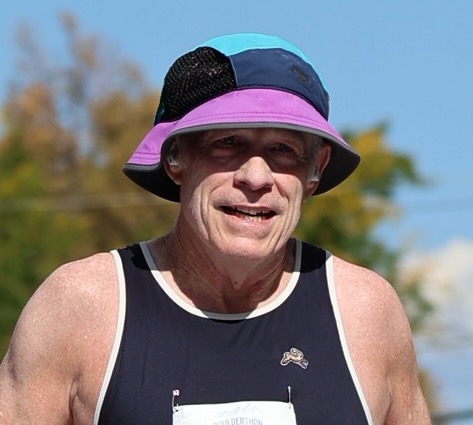
Which suggests I didn’t hydrate well enough. I don’t think I missed my sodium plan by much but it’s apparent I need more than 3,000 mg of sodium per 4 hours. I should plan to double that, which I think is still safe as long as I’m hydrating. I found it difficult to drink as much electrolytes as I did, so I might focus on eating more salt chews. Cramping caused me to lose 5 minutes and subsequently lose 1st for my age by 2 minutes, but more important is to learn from my race experience. That’s one point of races, learning where to adjust the plan.
I’m disappointed to have surrendered my first place position in the final mile, but I’m super happy with my race. I ran to plan and met my stretch goal. And learning from it for Bandera is gold. I’ve also determined I need more strength training. That mitigates cramping too. Exercises like squats, lunges, and deadlifts target the main muscle groups used in running. A strong core supports proper running form, reducing fatigue and cramping. Calves and Hamstrings are prone to cramping, so strengthening them can help. My strength isn’t weak. I target 3 days per week but generally only do strength training once a week. I’ll strive to do better for Bandera. I have 3 months.

Here are some great stats from the race if you’re into that. They show I went from 2nd to 1st for my age in mile 16 and gave it back up in the final mile. The Boulderthon does some really good things, from these superb timing stats to the best aid stations ever.
| Course | Interval | Chip Time Place | ||||||||
| Time | Distance | Time | Pace | Distance | Time | Pace | Overall | Sex | Age | |
| Mile 1* | 7:17:07 AM | 1 | 8:32 | 8:31/mi | 1 | 8:32 | 8:31/mi | 272 | 221M | 2M60-64 |
| Mile 2 | 7:25:36 AM | 2 | 17:00 | 8:29/mi | 1 | 8:29 | 8:28/mi | 272 | 221M | 2M60-64 |
| Mile 3* | 7:33:54 AM | 3 | 25:18 | 8:25/mi | 1 | 8:19 | 8:18/mi | 261 | 216M | 2M60-64 |
| Mile 4 | 7:42:12 AM | 4 | 33:37 | 8:24/mi | 1 | 8:19 | 8:18/mi | 261 | 216M | 2M60-64 |
| Mile 5 | 7:51:07 AM | 5 | 42:31 | 8:30/mi | 1 | 8:55 | 8:54/mi | 257 | 215M | 2M60-64 |
| Mile 6 | 7:59:07 AM | 6 | 50:31 | 8:25/mi | 1 | 8:01 | 8:00/mi | 262 | 217M | 2M60-64 |
| Mile 7 | 8:08:15 AM | 7 | 59:39 | 8:31/mi | 1 | 9:08 | 9:07/mi | 261 | 216M | 2M60-64 |
| Mile 8 | 8:16:58 AM | 8 | 1:08:23 | 8:32/mi | 1 | 8:44 | 8:43/mi | 266 | 220M | 2M60-64 |
| Mile 9 | 8:26:41 AM | 9 | 1:18:05 | 8:40/mi | 1 | 9:43 | 9:42/mi | 274 | 226M | 2M60-64 |
| Mile 10 | 8:34:38 AM | 10 | 1:26:02 | 8:36/mi | 1 | 7:58 | 7:57/mi | 274 | 227M | 2M60-64 |
| Mile 11 | 8:44:47 AM | 11 | 1:36:11 | 8:44/mi | 1 | 10:10 | 10:09/mi | 336 | 277M | 2M60-64 |
| Mile 12 | 8:53:07 AM | 12 | 1:44:31 | 8:42/mi | 1 | 8:20 | 8:19/mi | 326 | 270M | 2M60-64 |
| Mile 13 | 9:01:42 AM | 13 | 1:53:06 | 8:41/mi | 1 | 8:36 | 8:35/mi | 291 | 242M | 2M60-64 |
| Mile 14 | 9:09:57 AM | 14 | 2:01:21 | 8:40/mi | 1 | 8:15 | 8:15/mi | 276 | 230M | 2M60-64 |
| Mile 15 | 9:18:55 AM | 15 | 2:10:19 | 8:41/mi | 1 | 8:58 | 8:57/mi | 274 | 229M | 2M60-64 |
| Mile 16 | 9:29:25 AM | 16 | 2:20:50 | 8:48/mi | 1 | 10:31 | 10:30/mi | 274 | 228M | 1M60-64 |
| Mile 17 | 9:37:40 AM | 17 | 2:29:05 | 8:46/mi | 1 | 8:16 | 8:15/mi | 264 | 221M | 1M60-64 |
| Mile 18 | 9:46:13 AM | 18 | 2:37:37 | 8:45/mi | 1 | 8:33 | 8:32/mi | 260 | 217M | 1M60-64 |
| Mile 19 | 9:55:17 AM | 19 | 2:46:41 | 8:46/mi | 1 | 9:04 | 9:03/mi | 251 | 206M | 1M60-64 |
| Mile 20 | 10:04:46 AM | 20 | 2:56:11 | 8:48/mi | 1 | 9:30 | 9:29/mi | 250 | 206M | 1M60-64 |
| Mile 21 | 10:15:04 AM | 21 | 3:06:29 | 8:52/mi | 1 | 10:18 | 10:17/mi | 233 | 198M | 1M60-64 |
| Mile 22 | 10:25:00 AM | 22 | 3:16:24 | 8:55/mi | 1 | 9:56 | 9:55/mi | 228 | 190M | 1M60-64 |
| Mile 23 | 10:34:56 AM | 23 | 3:26:21 | 8:58/mi | 1 | 9:57 | 9:56/mi | 251 | 203M | 1M60-64 |
| Mile 24 | 10:44:46 AM | 24 | 3:36:10 | 9:00/mi | 1 | 9:50 | 9:49/mi | 245 | 197M | 1M60-64 |
| Mile 25 | 10:56:19 AM | 25 | 3:47:43 | 9:06/mi | 1 | 11:33 | 11:32/mi | 261 | 209M | 1M60-64 |
| Mile 26* | 11:09:32 AM | 26 | 4:00:57 | 9:16/mi | 1 | 13:14 | 13:13/mi | 291 | 232M | 2M60-64 |
| Mile 26.2 | 11:12:11 AM | 26.2 | 4:03:36 | 9:17/mi | 0.2 | 2:39 | 13:13/mi | 291 | 232M | 2M60-64 |
Quarterly stats below further show I was running under my stretch goal for 3 quarters of the distance.
| Course | Interval | Chip Time Place | ||||||||
| Time | Distance | Time | Pace | Distance | Time | Pace | Overall | Sex | Age | |
| 1st Quarter* | 8:04:08 AM | 6.55 | 55:33 | 8:28/mi | 6.55 | 55:33 | 8:28/mi | 261 | 216M | 2M60-64 |
| 2nd Quarter* | 9:02:31 AM | 13.1 | 1:53:56 | 8:41/mi | 6.55 | 58:24 | 8:54/mi | 276 | 230M | 2M60-64 |
| 3rd Quarter* | 10:01:27 AM | 19.65 | 2:52:51 | 8:47/mi | 6.55 | 58:56 | 8:59/mi | 250 | 206M | 1M60-64 |
| 4th Quarter | 11:12:11 AM | 26.2 | 4:03:36 | 9:17/mi | 6.55 | 1:10:45 | 10:47/mi | 291 | 232M | 2M60-64 |
After gaining a better understanding of my body’s sodium requirements, the next area of learning revolves around my max heart rate and lactate threshold. Understanding this better will facilitate my training for the ultra in January. My average heart rate during the marathon was 153. The age-based max heart rate math suggests 158 is my peak. My peak heart rate Sunday was 181, so clearly my max is somewhere above the average for my age.
I was never winded, although I started breathing heavier in the final 10K. This tells me the 150 range is well below my lactate threshold. What this also tells me is that I should start to maintain my runs in the 150 range. I generally run in the 130 range. So I need to train a bit harder. I don’t have the time to put in many more miles than I’m already running, but I can squeeze in what is called HIIT for High Intensity Interval Training. I need to challenge my lactate threshold. That will improve my endurance and performance in less miles. That’s my second lesson learned and my plan for the rest of the year.
Learning and planning. That’s what makes racing fun.

 A Runner's Story
That is just frickin’ amazing. Congratulations! I never would have imagined you’d run it at a 9 minute pace. And finishing in suck style! Must be the hat.
For some reason I was sure the race was this morning (10/5) and so tried to follow your progress on the website link. I had only had one cup of coffee at the time, and it said you were already done (in 4 hours), but it also showed the race date of 2023. I will never attempt something like that again with just one cup of coffee in me, because it took a long time for my brain to reset. Glad your post popped up soon after.
BTW, I don’t know about changing your trail name, but your running name should be “The Chemist,” or maybe “Heisenberg.” It has been really interesting understanding how the fuel can be just as important as the actual training. I guess my take-away is that once your body can run a fair distance, you just have to fuel it correctly and it will run whatever distance you want it to.
Congratulations again. Well done, lad, well done.
LikeLiked by 1 person
Ahem. That is “such” style.
LikeLiked by 1 person
Thanks. I do like the technical details, sort of like the logistics in backpacking. And I think you might be right, with the correct fueling, and assuming you put in the training, one can maybe run forever.
LikeLike
Amazing Ed!! Seems you are doing everything right. Oh and your time was the same time as my first marathon when I was 41, so not sure how you do it!
LikeLiked by 1 person
It’s Beth R. btw
LikeLiked by 1 person
How you doing, Beth? I just assume you’re still running.
LikeLike