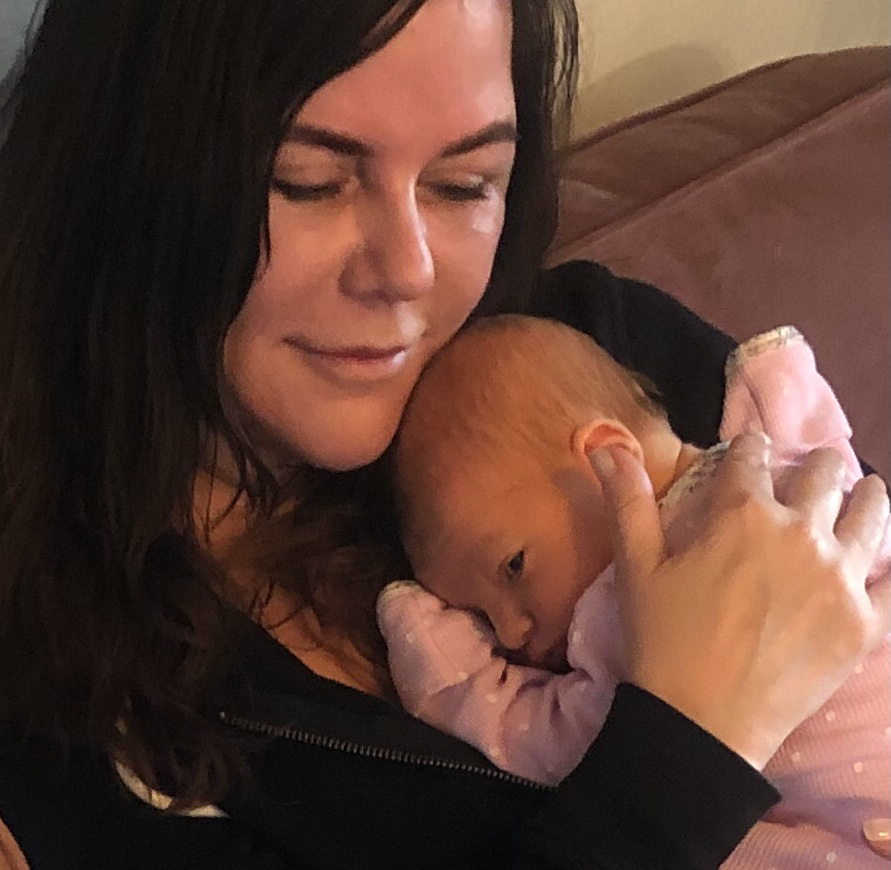
As much as I try to make this blog all about me, this story is about Margot Faye. The photo above, taken Friday night, captures my first time to see her. First time to hold her. First time to play grandfather.
Brit went into the hospital at 10:00 pm Monday and delivered Margot into the world at 10:11 pm Tuesday. Prevented from entering by Covid, I spent four hours outside in the parking lot. Allowed in under the spouse plus one rules, Karen would step outside from time to time to give me updates.
Now a grandfather, my life is full. There is nothing more I should ask for, and yet I do want more. I want more time with Margot Faye. I want to be healthy enough to keep up with her. I don’t need to be skinny, I understand that my double chin is here to stay, but I want to experience the Colorado outdoors with Margot. Hiking and snowshoeing. Backpacking adventures. I want to be with Margot on her first fourteener.
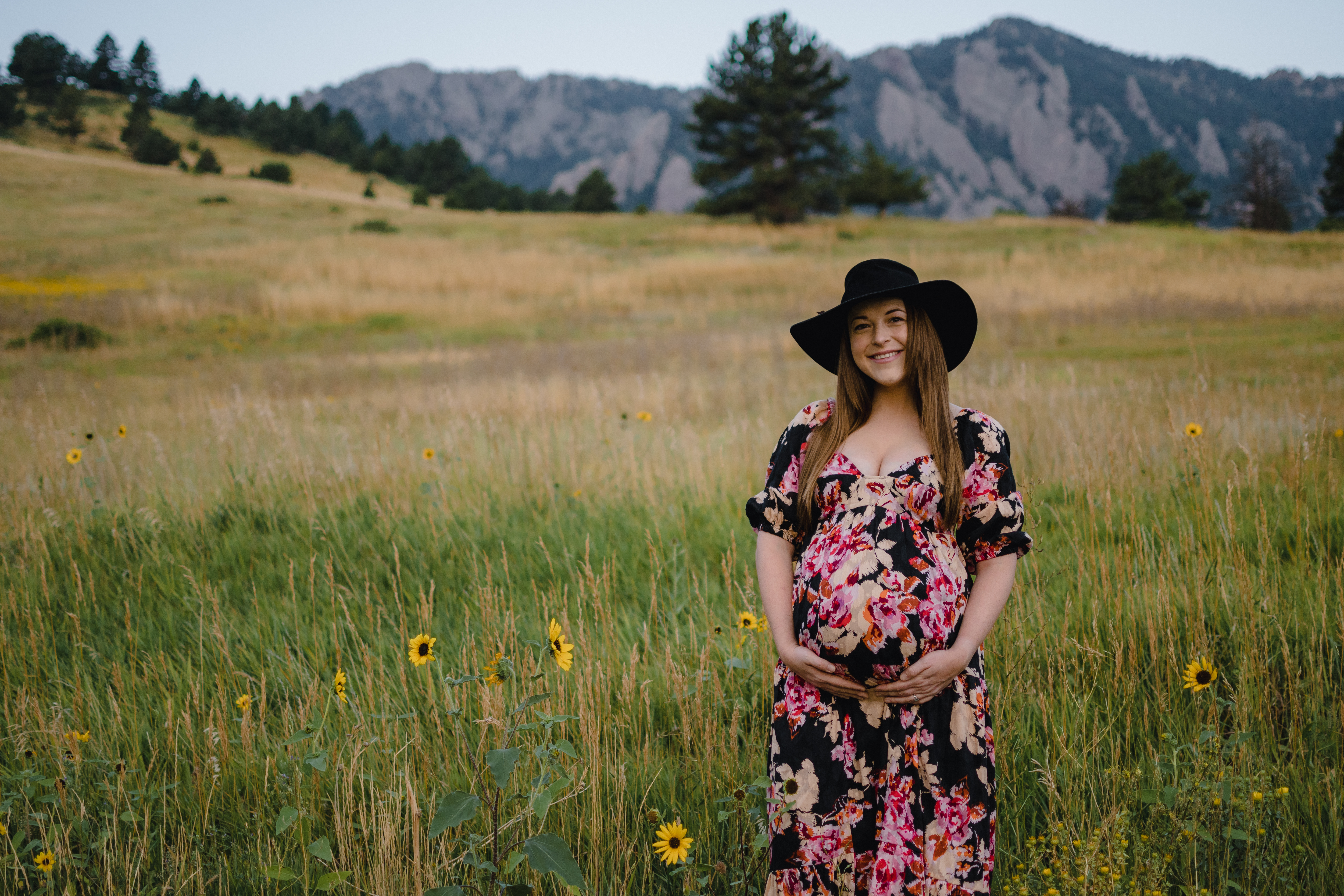
Margot Faye will have a wonderful life. She’ll be raised by Brit and Eric, two grateful parents who will take care of her needs and give her the support to grow with confidence. Brit will give Margot the gift of song. Margot will be singing before she can talk. Eric will have Margot running trails through alpine meadows before she can walk. Margot will be spoiled by her grandparents in both Colorado and Boston. Her aunt Ellie lives just a few miles away. And there are great grandparents who can’t wait to see her.
After nine months of growth in the womb, Margot now has a life in the world. Her life will be a story of joy, sometimes of sadness, she will know love and love lost. She will experience everything there is of life but never alone. She will be surrounded by a supportive and loving family. And she will bring joy to all who know her. She already has.
Yesterday was Brit’s due day. Not overly bummed that Margot Faye didn’t arrive on 911, but we’re on pins and needles. All I can do to pass the time is run. October 10th will be my first marathon as a grandfather, assuming I can get to where I need to be. I’ve worked my way up to running ten miles comfortably and I’m making progress learning how to best run over-weight, which is, wait for it, slow. Really, really, slow.
Speed is relative of course but my legs naturally fall into a nine and a half minute pace after they’ve warmed up. Problem is, I can’t sustain that pace for much more than ten kilometers. Running slower than your legs want to naturally go is harder than you might think. My cadence has been steady, regardless of distance, just over 170 strides per minute. Cadence is more of a cyclist term. Runners will instead refer to “pace” or “roll”, as in “I rolled past him.” But cadence is still a thing for runners, just as it is for cyclists.
If you’re running, as opposed to walking, then you’re very likely maintaining a cadence between 170 and 180 strides per minute, regardless of speed. If you’re running slower, say over a ten minute pace, then your cadence might be between 160 and 170, but for the most part, speed is determined by stride length while maintaining the same cadence. That might not be intuitive, but that’s how it works.
I’m finding it hard to run an eleven minute pace, I’ve been in the ten minute range. In the marathon itself though, I’ll simply line up behind the 5-hour pace sign. That will give me an 11:30 pace. If I feel good half way, I might run ahead of the pace sign at the Boulder Res. If I’m disciplined though, I’ll wait until about twenty miles, which is the start of a three mile down-slope segment. Slopes are noticeable at altitude.
I ran ten miles yesterday and was feeling strong enough to attempt twelve by running six miles before turning around. This part of my trail is actually a loop, or a lollipop as they say because it’s a five mile stick with a two mile loop. Problem was that the loop began an upslope. Gentle enough that you wouldn’t notice it at sea-level, but at a mile-high in elevation, it raced my heart up ten beats over my max rate for one and a half miles. I couldn’t recover by slowing down, which I did. It didn’t begin to drop again until the return where the slope began to drop.
The Boulder Marathon course will have a few tough slopes like that. Some that I would even call hills, although nothing terribly steep. It’s good to know that my heart rate will recover, I just have to hang in there and wait for the other side of the hill.
It occurs to me that I’m blogging more because of this marathon. Because I’m nervous. And that makes me think of what Brit is going through right now. She’s been pinging our family chat regularly with updates. She’s understandably nervous. My marathon is trivial compared to her life event. I recall how I felt decades ago. The anxiety was unlike anything I’ve ever gone through since. But then that baby is born and all is perfect.
That day is coming any minute now. The Rose Medical Center’s Covid rules are father +1, so Eric and Karen can be in the hospital. I’ll be a mile down the street in a Cherry Creek hotel. So excited to meet Margot Faye.
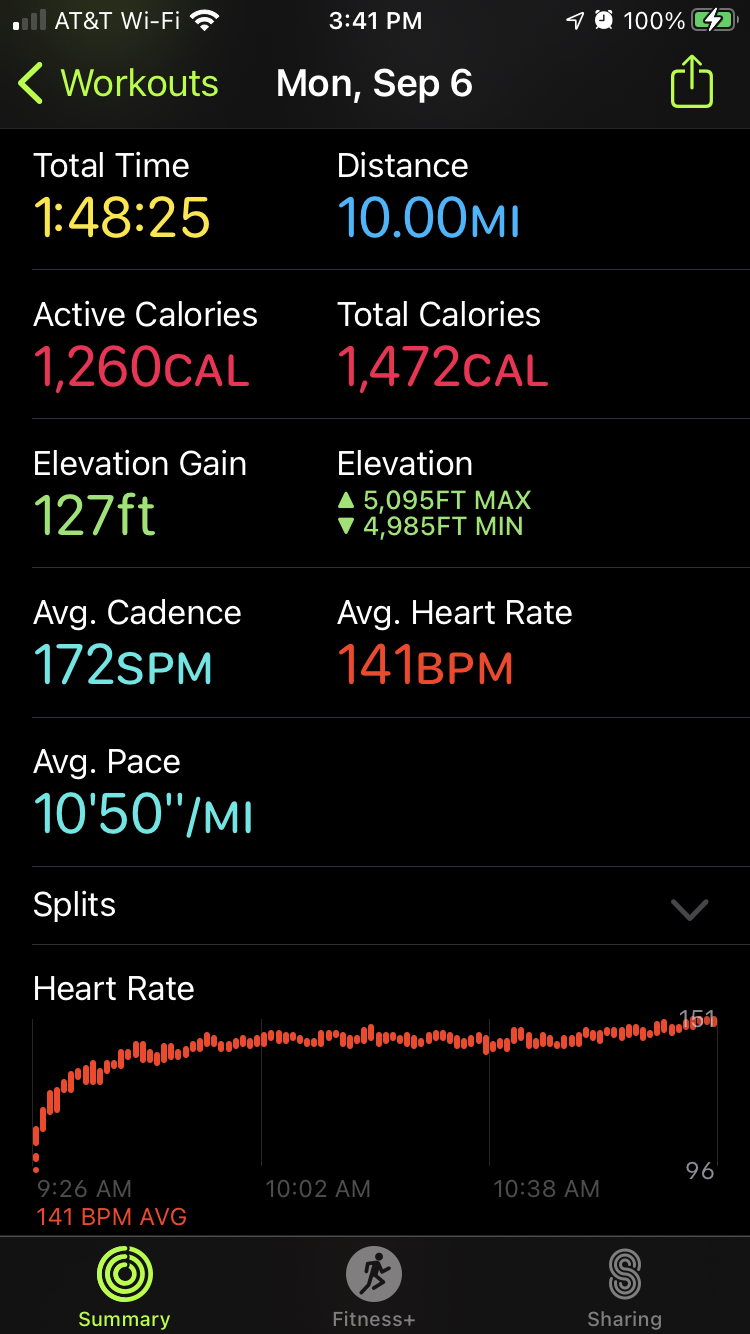
Sharing my stats is a clear sign I’m beginning to exhibit compulsive runner behavior, but it’s a runner’s blog, so there you go. Sharing my stats from today’s ten miler to illustrate how I’m going to use my heart rate monitor as my primary tool to get me to the finish line. Now that I’m tracking my stats, I’ve discovered that I have been starting to walk/run once my heart rate exceeds 160 beats per minute (BPM). That’s a function of my current fitness which I could no doubt exceed if I were twenty-five pounds lighter. In fact I have. Below are my stats from my last marathon four years ago.
You use the BPM tool like this. Subtract your age from 220 to know your max heart rate. Mine is 161. Four years ago, mine was 165. Experts say you should target running between 50% and 85% of your max heart rate. At 85%, that suggests I should run with my heart rate around 136, or four years ago, around 140.
During today’s run, I read my heart rate at 144 BPM just short of four miles. I purposely slowed myself down, by shortening my stride (my stats proved I maintained my cadence), and monitored it closely so that I didn’t reach 160. I was able to actually slow it down a couple of beats, although it crept back up to 151 by the end of the run. My experience was that I was able to comfortably run ten miles.
You might notice that my stats from the Colorado Marathon four years ago show I averaged more than 10 BPM over my max heart rate for the duration. Apparently, it’s not a sudden death limit as my max was over 200. Probably lucky to still be alive, but I was much more fit back then. You might also notice the Apple Watch graphing software really sort of sucked four years ago.
I’ll practice this more but I suspect if I can maintain a pace around eleven minutes per mile, I’ll be able to keep my heart rate below 150 and that will enable me to keep running. Maybe even below 140, which is what I should really target to avoid a heart attack. I’ve always enjoyed running without a watch, but I have to say, tech is cool.
The term delusional is often bandied about with a negative connotation. My run this morning forced me to consider for a moment that I might be delusional, thinking I can prepare for a marathon, grossly overweight with ten weeks of training. Fortunately, I’m not overly introspective and the moment passed. I don’t think considering reality is all that constructive while training.
I have up until the expo, the night before the marathon, to drop down to the half marathon and I’ll pivot to reality then. My thinking is that I’ve made good progress in the last five weeks and I have yet five more weeks.
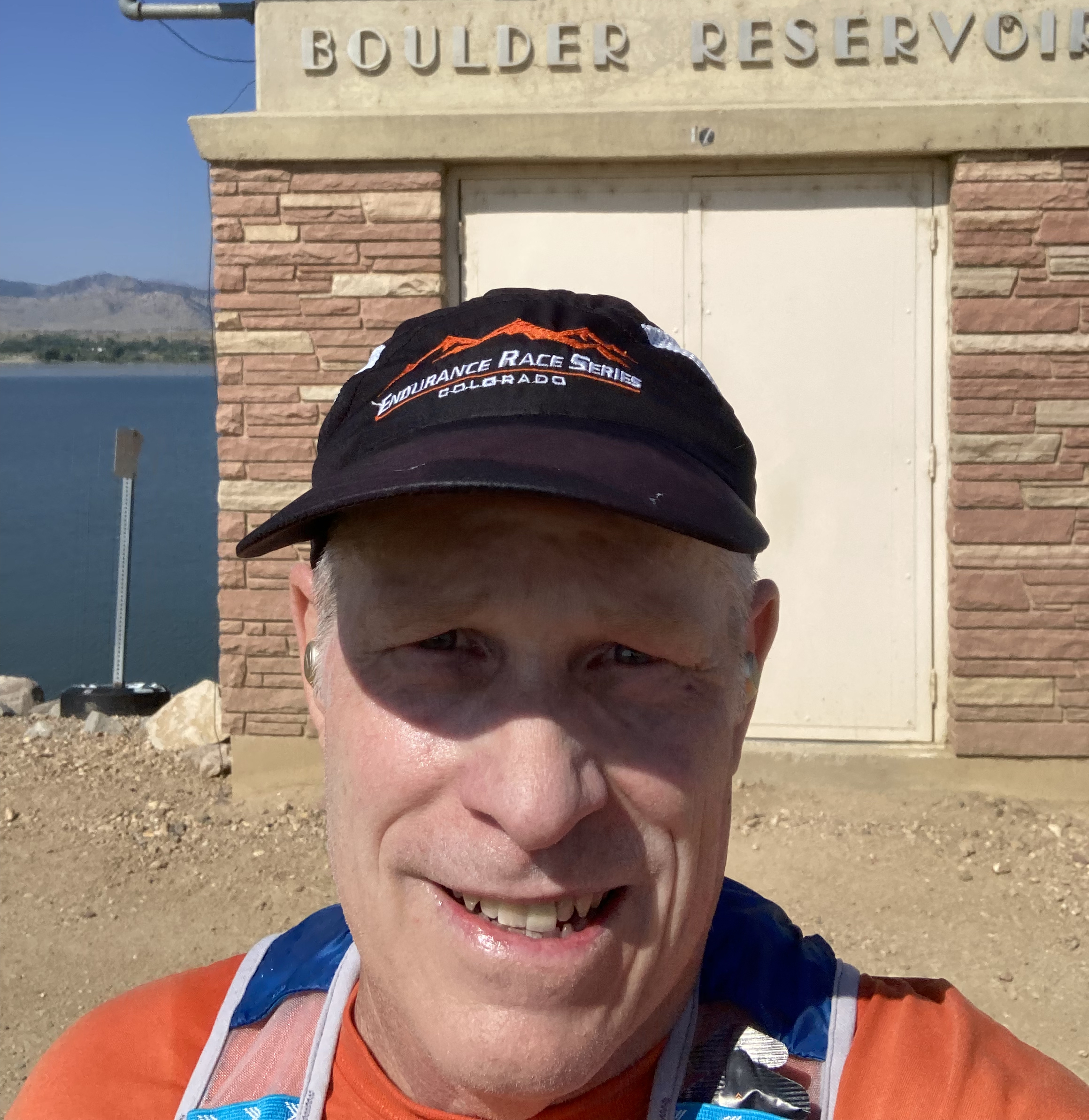
For today’s challenge, I parked at the Boulder Res and started my run exactly where the race is set to start. I had a number of objectives with this run. The first was to see if I could run the first sixteen miles of the course, which would loop me back around to my car. It’s sort of a commitment because if I couldn’t make it beyond eight miles, I would have an eight mile walk back to my car. That’s sort of what happened.
My second objective was to observe the accuracy of the course map. I can tell from looking at it that the final two miles along Magnolia and Pearl Streets are off by a half mile. I can now inform the race director that the first nine miles of the course map are off by a mile and a half, because my watch recorded eight miles where the map shows nine and a half. I made it to what I believe is the turn-around at Ouray and Oxford Roads and made it halfway back up the hill on Oxford before admitting I couldn’t make it to the top. This is where I began to walk.
With this, I’d met two objectives. I learned I can’t run sixteen miles and I proved the inaccuracy of the course map. All very good things to know. I wasn’t happy with having to walk so early, but the air quality wasn’t all that great, sixties when I left the house and nineties when I returned, and it set me up to test another one of my goals.
I wondered if, in the marathon, I ran the first half at around an eleven minute pace, could I walk/run the rest of the race and stay under the six hour completion threshold? Overall, I need to run a little under a 13:30 pace to remain eligible to finish before they reopen the streets. I think that will work because I ran a 10:27 pace before I started walking, and I maintained a 13:51 pace for the next six miles once I started walk/running. This also suggests I’ll benefit from running slower, at least an eleven minute pace.
Back to my second objective, the six miles of my walk/run back to the car accurately mapped to the course map. Hope the race director finds those observations useful. Because I’ve been pestering the race officials with everything from confirming my registration, to hotel discounts, to this map nonsense, I might use another email address going forward in case they’ve taken actions to block my other one.
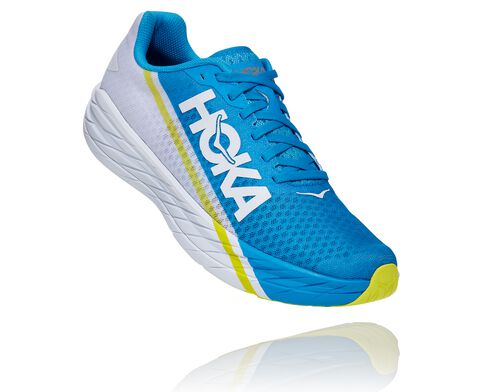
The final useful objective was to learn that my shoes will work well on this course. I don’t know the percentage for the entire course, but the Boulder Backroads are over half gravel vs pavement. Some sections, like along the irrigation ditch, are brutal on the feet. At least, once your feet have become tender from having run so many miles. I recall my last Boulder marathon that was run as two loops around the Backroads and Res and hitting the irrigation ditch road was like walking on hot coals. I don’t normally like overly soft running shoes, or what runners call a high stack, but these Hoka Rockets performed. I couldn’t feel the gravel at all. Until I get some tougher feet, these shoes are what I need.
If I were to face reality, after today’s run, I’d drop down to the half, or perhaps from the race entirely. Instead, I’m still looking at this thing through Ted Lasso glasses and figure I learned a lot of good things from today’s poor run. I neglected to add that I nearly vomited afterward. Even though I carried and fully drank a liter of electrolytes, I ended the run dehydrated. Today was a tough run. Tomorrow is another day.
When you can see the Flat Irons over Boulder, indeed the Indian Peaks way back there, you know the air quality is safe to run in. I’ve learned to gage the index by looking at the foothills. When in doubt, I query Alexa before stepping out the door. I should be painting the trim on my carriage house, but with just five more weeks before the Boulder Marathon, I’m taking advantage of the three-day weekend to train.
I began Saturday running the East Boulder Trail. It’s one of my favorites, a trail I’ve been running for over thirty years. It gives me a good sense of my fitness level. I wasn’t fully recovered from a late afternoon run on Friday, but I ran well enough.
I ran alongside a twenty-something year-old woman at the turn-around for about a mile. She was running the pace I need to learn, around an eleven-minute pace, and we chatted for a bit. Since Karen gave me her Apple watch, I’ve started recording my runs and I now know I can run a 9.5 minute pace for up to ten miles. But running that fast in a marathon would lead me to a DNF. I should have kept running with her but she began to slow down from a 10:50 to an 11:10 pace, and I struggled to run that slow. Muscles have memory and mine remember running fast. I passed her to run what my legs were comfortable running, but wish now I’d kept with her. If I’m honest, I probably need to learn to run a twelve minute pace.
Check out the marathon course map. The northern loop above the Boulder Res is what runners refer to as the Boulder Backroads. I’m gonna run them tomorrow. I’ll trace the course which starts on the south side of the Boulder Res and heads north, returning to the start before heading into Boulder to finish downtown. If I’m successful, I’ll run sixteen miles. That’ll be a long run for me. I’ll use it to train slow running and to test my sports drinks and gels. If I can run sixteen miles tomorrow, I’ll gain some confidence at completing twenty-six miles five weeks from now.
By the way, I dropped my diet plan after last week’s blog. I’m not known for my patience and four friggin’ weeks without losing a single pound was more than I was willing to invest. And guess what, I lost two pounds this week. I don’t see myself getting below 190 now, with only five weeks to go, but I’m changing my strategy. Instead of bringing my weight to the run, I’m going to bring the run to my weight. I feel like the calisthenics I’ve been performing for the last five weeks have firmed my body up enough to enable me to run with this weight, assuming I run slow enough. I think I’ll be able to run an eleven to twelve minute pace at this weight, and finish that marathon under the 13.5 minute cut-off threshold. The goal this weekend is to learn to run that pace.






 A Runner's Story